
On AllBetter
Need a landscaper?
Post the job free and compare bids from identity-verified local pros — payment held in escrow until the work is done right.
Find a landscaper near you →Your landscaping is the first thing a buyer sees — and the first reason they keep driving. Long before anyone walks through the front door, dead grass, overgrown hedges, and a cracked walkway have already set the price they think your home is worth. This guide covers the landscaping red flags that quietly tank curb appeal, what each one costs to fix, and where the repair money actually pays you back.
Hardscape quotes deserve the same scrutiny as planting plans: if a patio or walkway pour is part of the project, read the concrete slab cost guide so the per-square-foot math is yours before any bid arrives.
Which landscaping problems hurt home value the most? A dead or patchy lawn and overgrown, misshapen shrubs do the most damage — they read as neglect instantly. Real-estate agents generally estimate poor curb appeal can pull a home’s perceived value down by roughly 5–10%, while well-kept landscaping can lift it by 5–15%. The good news: the highest-impact fixes are also the cheapest.
The 7 Landscaping Red Flags, in Order of Impact
On AllBetter
Ready to get it done?
Fund escrow before work starts. Release payment when you approve the finished work.
Find a landscaper near you →Not every flaw costs you the same. These are the seven that move a buyer’s price perception — ranked from the most damaging to the least.
1. Dead or Patchy Lawn — High Impact
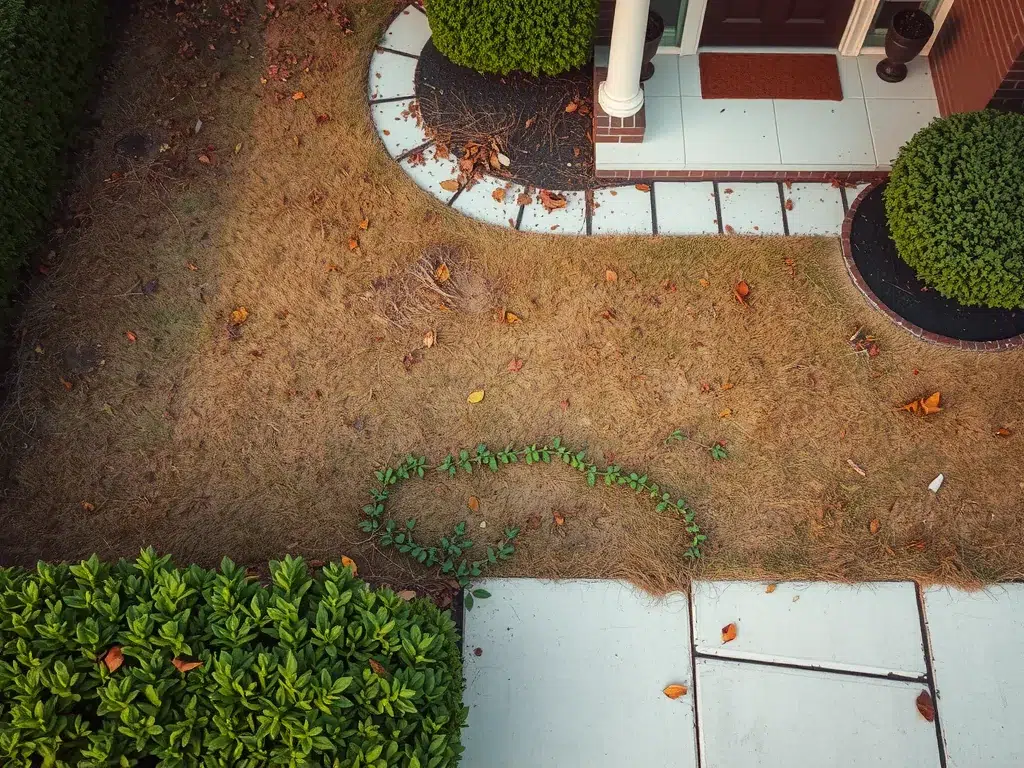
A brown, patchy lawn signals neglect the moment a buyer pulls up. Winter kill, fungal damage, and bare spots all need attention in early spring before the growing season starts. Overseeding an average yard costs $200–$500; sod replacement for severe damage runs $1,000–$3,000. Routine upkeep prevents nearly all of it — see our breakdown of what regular lawn care service costs if you want a pro to keep it from getting to this point.
2. Overgrown or Misshapen Shrubs — High Impact
Shrubs that block windows make a home look abandoned, and lopsided hedges scream deferred maintenance. Spring is the ideal pruning window for most deciduous shrubs — after the last frost, before new growth hardens. Professional pruning and shaping runs $200–$600 depending on how many shrubs you have. Removing and replacing severely overgrown specimens costs $500–$1,500. For anything beyond a hedge — an oversized tree crowding the house or a dead limb over the walkway — check tree removal and pruning costs before you climb a ladder.
3. Bare or Faded Mulch Beds — Moderate
Mulch fades and thins over winter, exposing bare soil and weeds. Refreshing it is one of the cheapest, highest-impact updates you can make: a 2-inch layer costs $200–$500 in materials, or $400–$800 installed for an average home. Dark brown or black mulch photographs best in listings and sharpens the contrast with green plantings.
Related: mulch installation near you
4. Cracked or Heaved Walkways — Moderate
Freeze-thaw cycles heave concrete and pavers, creating trip hazards and an unkempt look. Minor cracks can be patched for $100–$300. Significant heaving — usually from tree roots — needs section replacement at $500–$2,000. Spring is when the damage is most visible and when contractors are most available for hardscape repair.
See also: paver patio installers near you
5. No Seasonal Color — Moderate
Homes with no flowers look flat and lifeless in spring, exactly when buyers are most active. You do not need a garden redesign — six to eight flats of annuals (petunias, impatiens, marigolds) cost $50–$150 and transform bare beds in an afternoon. For early spring, pansies and snapdragons thrive in cooler weather and bloom until summer annuals take over.
6. Visible Irrigation Problems — Lower but Costly
Broken sprinkler heads, pooling water, and dry zones all signal a neglected system. Spring startup is when you catch freeze damage to lines and heads. A professional startup and inspection costs $75–$150; replacing broken heads runs $5–$15 each. Ignored irrigation leads to uneven lawns, foundation damage from pooling, and water bills that can spike $50–$100 a month.
7. Cluttered or Dated Hardscape — Lower but Visible
Faded plastic edging, crumbling retaining walls, dated garden ornaments, and mismatched materials create visual clutter that cheapens the whole property. Spring cleanup means removing anything cracked, faded, or decorative-but-dated. Swap plastic edging for aluminum or stone at $2–$5 per linear foot, and power-wash pavers and retaining walls for $200–$400 professionally.
What a Spring Landscaping Refresh Costs
A curb-appeal refresh is mostly labor with inexpensive materials, so the quote you get is largely someone’s labor rate. Here is how the three common tiers break down:
| Tier | Typical cost | What it covers |
|---|---|---|
| Budget refresh | $500–$1,200 | Fresh mulch, seasonal flowers, lawn overseeding, hedge trimming — mostly DIY-friendly |
| Standard refresh | $1,500–$3,500 | All of the above plus sod replacement, walkway repair, irrigation startup, professional pruning |
| Full redesign | $5,000–$15,000 | New plantings, hardscape replacement, lighting, full sod, irrigation overhaul |
The budget tier delivers the most value per dollar — mulch, flowers, and a tidy lawn carry most of a buyer’s first impression. The National Association of Realtors has reported that basic landscape maintenance tends to recover close to all of its cost at resale, which makes it one of the highest-return improvements available. The full redesign returns a smaller share but transforms the property when you are planning to stay.
How to Spot Your Own Red Flags
The hardest part is seeing your yard the way a buyer or appraiser does — your eyes have learned to ignore problems you pass every day. Two quick checks fix that:
- Photograph the house from the street. Look at the photo on your phone, not the actual yard. Photos expose asymmetry, bare spots, and color mismatches your eyes filter out.
- Do not over-landscape. Elaborate water features, exotic plantings, and high-maintenance formal gardens can deter buyers who see future upkeep costs. Stick to clean, low-maintenance designs that photograph well.
Spring is the narrowest window for this work: the ground is workable, new plantings establish roots before summer heat, and contractors have availability before their busiest stretch. By June, many landscaping companies are booked weeks out and pricing reflects peak demand.
Frequently Asked Questions
How much does landscaping affect home value?
Real-estate professionals generally estimate that good landscaping can lift a home’s perceived value by roughly 5–15%, while poor landscaping can pull it down by about 5–10%. The National Association of Realtors has reported that basic landscape maintenance tends to recover close to all of its cost at resale, making it one of the highest-return home improvements available.
What landscaping should I do in spring?
Spring priorities include overseeding or repairing winter-damaged lawn, pruning overgrown shrubs, refreshing mulch beds, planting seasonal flowers for color, repairing cracked walkways, starting up and inspecting the irrigation system, and cleaning up hardscape elements like edging and retaining walls.
How much does a spring landscaping refresh cost?
A budget refresh of mulch, flowers, overseeding, and hedge trimming costs $500–$1,200. A standard refresh that adds sod replacement, walkway repair, and irrigation startup runs $1,500–$3,500. A full landscape redesign with new plantings and hardscape costs $5,000–$15,000.
What’s the cheapest way to improve curb appeal?
Fresh mulch ($200–$500), seasonal flowers ($50–$150), and a tidy, overseeded lawn ($200–$500) deliver the highest visual impact per dollar. Together they can transform a yard for around $1,200 or less, and most of the work is doable in a single weekend.
Which landscaping red flags hurt home value the most?
A dead or patchy lawn and overgrown, misshapen shrubs do the most damage — both read as neglect the instant a buyer pulls up. Bare mulch beds, cracked walkways, and no seasonal color are moderate hits, while irrigation problems and dated hardscape are lower-impact but still visible.
Should I DIY landscaping or hire a professional?
DIY works well for mulching, planting annuals, basic pruning, and routine lawn care. Professionals are worth the cost for sod installation, irrigation work, hardscape repair, large tree pruning, and anything involving grading or drainage — those tasks need specialized equipment and experience.
Does landscaping help a house sell faster?
It generally does. A buyer’s first impression forms in seconds from the curb, and surveys consistently find that most buyers rate curb appeal as an important factor in their decision. Homes that present well from the street tend to attract more interest and fewer price reductions.