


The average local move in the United States costs between $1,250 and $2,500, according to the American Moving and Storage Association (AMSA). Yet most of that expense is controllable. Weight, hours, and poor timing drive the final bill far more than distance. Homeowners who plan their move like a structured project rather than a weekend scramble consistently spend less and lose fewer belongings in the process.
On AllBetter
Need a local pro?
Post the job free and compare bids from identity-verified local pros — payment held in escrow until the work is done right.
Find a verified pro near you →Deciding between a full-service crew and labor-only help? See movers vs moving labor costs compared for 2026.
average local move cost (AMSA)
optimal planning timeline
cost reduction from decluttering before packing
What is a moving checklist? A moving checklist is a week-by-week timeline that breaks a residential move into prioritized phases, from decluttering and packing to cleaning and settling in, so that every task happens in the right order and nothing is forgotten.
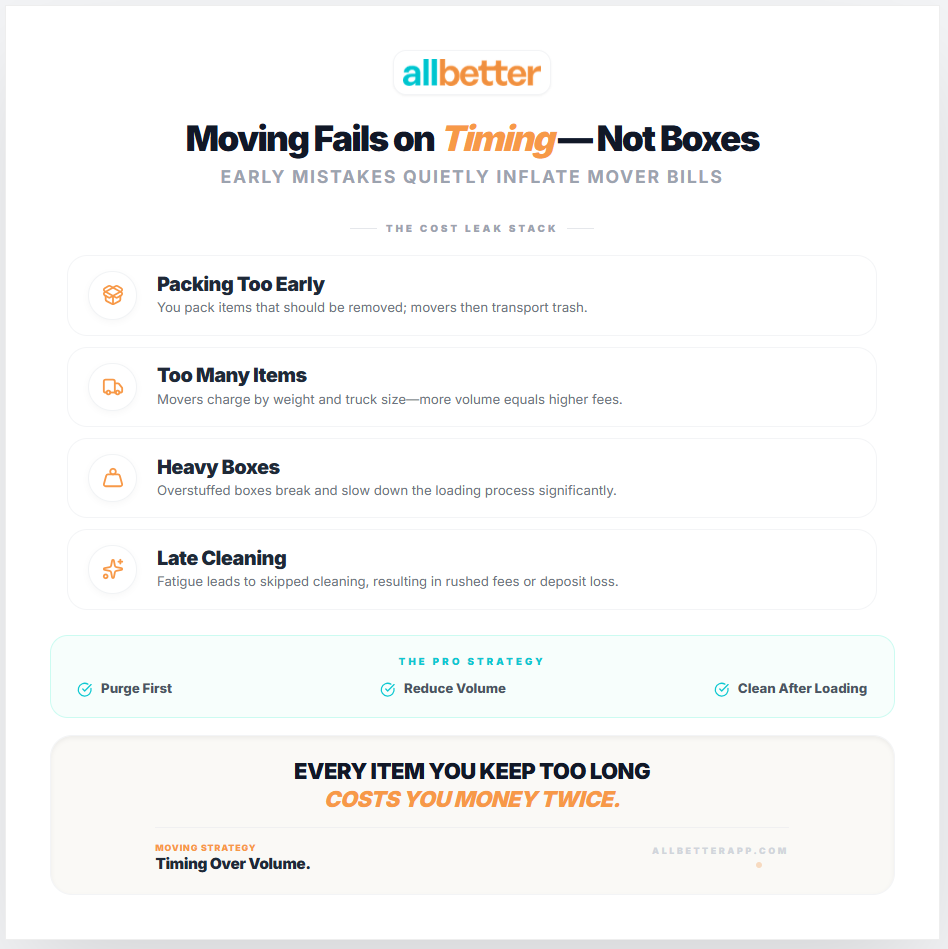
Why Timing Determines Moving Costs More Than Effort
Skipping the DIY route? You can post the job on AllBetter and have ID-verified pros bidding in about 10 minutes — no spam calls, payment held in escrow until you approve the work.
Moving companies price by two variables: time and weight. The Bureau of Labor Statistics (BLS) reports that household moving costs have risen roughly 4 percent annually since 2020, making efficiency more important than ever. Every unnecessary item you load adds weight to the truck and minutes to the crew’s clock. A disorganized packing strategy adds even more labor time because movers have to wait, rearrange, or make extra trips.
Moving costs have risen roughly 4% per year since 2020 (BLS). Planning efficiency is now more valuable than ever — every unnecessary box costs time and money.
The difference between a well-timed move and a chaotic one is rarely physical strength. It is sequencing. Purging happens before packing. Packing happens before loading. Cleaning happens after the truck leaves. When these phases flip, costs climb.
T-Minus 30 Days: Purge Before You Pack
The single most effective cost-cutting move is removing items before packing begins. Movers charge by the hour, and every broken appliance, forgotten box, or unused piece of furniture inflates the bill.
What to remove first
- Furniture you will not use in your new space
- Clothes not worn in the past 12 months
- Duplicate kitchen tools and gadgets
- Broken or outdated electronics
- Expired pantry items and cleaning products
The Federal Trade Commission (FTC) recommends getting written estimates from at least three moving companies. Providing an accurate inventory during those estimates leads to tighter quotes. Removing surplus items before the estimator visits means the quote reflects what you actually need to move, not what you should have discarded weeks earlier.
Donate usable items to local charities, sell higher-value pieces online, and schedule a junk removal pickup for anything left over. This single phase can reduce your total truck size by one tier, saving $200 to $600 on a local move.
T-Minus 21 Days: Set Up Priority Packing Zones
Most people label boxes by room. That system helps the movers but does nothing for you on arrival night. A priority-based system solves the real problem: knowing which boxes to open first.
Zone 1 (open immediately)
- Toilet paper, hand soap, paper towels
- Phone chargers and a power strip
- Coffee maker, mugs, and basic snacks
- Bed sheets, pillows, and one towel per person
- Box cutter and basic toolkit
- Medications and first-aid supplies
This box stays with you in your car, not on the truck. If the truck is delayed or the crew finishes late, you can still sleep, eat, and function.
Zone 2 (needed within three days)
- Three days of work clothes
- Basic cookware (one pot, one pan, utensils)
- Laptop, work files, and school supplies
Zone 3 (can wait one to two weeks)
- Books, decorations, and seasonal items
- Extra linens and guest supplies
- Hobby equipment and storage items
Mark each box with both the room name and the zone number. Movers use the room label for placement; you use the zone number for unpacking order. This dual-label system prevents the first-night chaos that derails most moves.
T-Minus 14 Days: Apply the Heavy-Light Box Rule
Box size directly affects both safety and cost. The National Safety Council notes that improper lifting and overloaded containers are among the top causes of moving-day injuries.
The rule is simple
- Heavy items (books, tools, canned goods) go in small boxes
- Light items (pillows, linens, lampshades) go in large boxes
A large box packed with books will weigh over 60 pounds, which breaks cardboard, strains backs, and slows the crew. A small box packed with pillows wastes truck space and packing time. Matching weight to box size keeps every container under 50 pounds, speeds up loading, and reduces breakage. Professional movers estimate that proper box sizing saves 15 to 30 minutes of loading time per room.
Wrap fragile items individually. Use towels, t-shirts, and socks as padding instead of purchasing bubble wrap for every dish. Fill empty space in each box with packing paper or crumpled newsprint so contents cannot shift during transit.
T-Minus 7 Days: Build a Simple Box Inventory
On AllBetter
Ready to get it done?
Fund escrow before work starts. Release payment when you approve the finished work.
Find a verified pro near you →Items go missing during moves even with reputable crews. The AMSA reports that damage and loss claims are among the most common complaints filed against moving companies. A simple inventory eliminates the guesswork.
How to track your boxes
- Number every box sequentially: “1 of 42,” “2 of 42,” and so on
- Keep a spreadsheet or notebook listing each box number, its zone, and a brief content summary
- Photograph high-value items before packing them
When the truck arrives at your new home, count the boxes as they come off. If box 27 is missing, you know immediately and can file a claim that same day. Without a list, losses surface weeks later, long after the window for resolution has closed.
For homeowners managing recurring home maintenance tasks alongside a move, keeping a separate checklist for ongoing property needs prevents important items from falling through the cracks during the transition.
Moving Day: Protect Your Energy and Valuables
Your role on moving day is decision-maker, not laborer. Direct the crew, answer questions about placement, and stay mentally sharp. Physical exhaustion leads to poor choices about where things go, and those choices create days of rearranging later.
Keep with you at all times
- Important documents (IDs, lease, closing papers)
- Medications and eyeglasses
- Laptops, external drives, and irreplaceable electronics
- Keys to both old and new properties
- Wallet, phone, and charger
Everything else rides the truck. Before the crew starts loading, do a final walkthrough of every room, closet, and storage area. Check the attic, garage, and any outdoor sheds. Missed items mean a return trip, which means additional cost.
If you are renting a truck rather than booking a full-service crew, confirm the reservation 48 hours in advance. The BLS notes that truck rental demand spikes on weekends and at the end of each month, leading to last-minute shortages and surge pricing.
After the Truck Leaves: Book the Final Services
This is the phase where most moves break down. Homeowners plan the packing and the truck but forget the services that finalize both properties. Fatigue sets in, and tasks get postponed indefinitely.
Move-out cleaning
An empty home is the easiest home to clean. Booking professional cleaning services after the truck leaves takes less time and produces better results than trying to scrub floors after a full day of lifting. For renters, a thorough move-out clean is the single best way to recover a security deposit. For sellers, a spotless home photographs better and shows better to prospective buyers.
New-home setup
Common first-week tasks that benefit from professional help include TV mounting, curtain rod installation, shelf assembly, and minor repairs. Booking a handyman for these small projects during the first few days prevents weeks of living out of boxes and staring at bare walls. Many homeowners also discover issues the previous owner left behind, from loose outlets to running toilets, that are easier to address while the house is still half-empty.
For a deeper understanding of when to call a pro versus handling a fix yourself, this guide on choosing the right contractor covers vetting, quotes, and red flags.
The Moving Service Timeline
| Phase | Service to Book | Why It Matters |
|---|---|---|
| Before packing (30 days out) | Junk removal | Reduces truck size and mover hours |
| After truck leaves (old home) | Move-out cleaning | Recovers security deposit or improves listing photos |
| First week (new home) | Handyman services | Speeds up setup and catches inherited issues |
| First month (new home) | Maintenance inspection | Identifies HVAC, plumbing, or electrical concerns early |
Platforms like AllBetter let you book cleaning and handyman services from a single app, though its provider network is still growing in some regions. Regardless of which platform you use, scheduling these services before moving day ensures availability and avoids the post-move scramble.
Planning ongoing upkeep at your new home? A free home maintenance planner helps you stay ahead of seasonal tasks so nothing falls through the cracks after the move.
Need movers, cleaners, or handymen for your move?
AllBetter connects you with verified local pros for every part of your move — loading, cleaning, repairs, and setup. escrow payment protection means your payment is held until you approve the work.
Common Mistakes That Inflate Moving Costs
Understanding what drives costs up is just as valuable as knowing how to save. These are the errors the AMSA and consumer protection agencies flag most often.
- Waiting until the last week to start packing, which leads to overtime charges
- Failing to disassemble furniture before the crew arrives
- Booking movers for a month-end weekend, when demand and prices peak
- Skipping the written estimate and relying on a phone quote
- Not purchasing adequate insurance for high-value items
- Ignoring the common mistakes homeowners make when managing a property transition
Each of these errors adds between $100 and $500 to a typical local move. Combined, they can double the original estimate.
How far in advance should I book movers?
Book at least four to six weeks before your move date. During peak season (May through September), eight weeks is safer. Early booking locks in availability and often secures a better rate. Last-minute bookings carry surge pricing and limited crew options.
Should I pack everything myself or use full-service packing?
Self-packing saves $300 to $800 on a typical move, but only if you start early and pack correctly. Full-service packing is worth the cost when you have fragile or high-value items, limited time, or a large home. A middle approach works well: pack standard items yourself and let the crew handle breakables, artwork, and electronics.
Do movers insure lost or damaged items?
Federal law requires interstate movers to offer two levels of liability coverage: released value (free, but covers only $0.60 per pound per item) and full-value protection (an additional fee, but covers repair, replacement, or cash settlement). For local moves, coverage varies by state. Always ask about insurance options during the estimate and photograph valuable items before the crew arrives.
When should I schedule move-out cleaning?
Schedule cleaning for the day after the truck leaves. An empty home cleans faster and more thoroughly than one still filled with furniture. If you are renting, check your lease for specific cleaning requirements. If you are selling, professional cleaning before listing photos can increase perceived value and speed up the sale.
What causes moving costs to spike unexpectedly?
The three biggest cost spikes are excess weight (too many items), excess time (disorganized loading), and access issues (narrow stairways, long carries from the truck to the door, or lack of elevator reservations in apartment buildings). Accurate pre-move estimates and thorough purging prevent most of these surprises.
Is labeling boxes by room enough?
Room labels help movers place boxes in the correct area, but they do not help you survive the first night. Adding a priority zone number (1, 2, or 3) to each box tells you what to unpack first. Zone 1 boxes contain essentials like bedding, chargers, and toiletries. This dual-label approach is used by professional organizers and relocation specialists.
How do I handle a move during bad weather?
Rain and snow do not cancel most moves, but they require extra preparation. Lay down floor protectors in both homes, wrap upholstered furniture in plastic, and have towels ready at every entry point. If conditions are severe, communicate with your moving company early in the day. Many crews will reschedule at no charge if conditions are genuinely unsafe, but last-minute cancellations may incur fees.
Hire an ID-verified home services pro — without the lead-gen markup
| Feature | Angi / Thumbtack / HomeAdvisor | AllBetter |
|---|---|---|
| Pro Identity Verified | Self-attested, no verification | Stripe Identity verification on every pro |
| Lead Fees to Pros | $15–$80 per lead (passed back to homeowner) | only pay when you win — ever |
| Payment Protection | None — you pay direct, hope for the best | Escrow Shield — you only release payment when work is approved |
| Pro Quality Filter | Anyone can sign up; reviews come later | ID-verified pros, average 3+ bids per job |
| Spam & Auto-Calls | Your phone rings for days after one inquiry | Zero spam — pros message in-platform |
Lead-fee context: home services leads on traditional platforms run $20-$80 each — that markup gets baked into your quote.
DIY-ing home services work without an ID-verified pro can turn a $200 fix into a $2,000 do-over — and the quality issues only show up months later. The safer move is to post the job on AllBetter — you get ID-verified bids in minutes, no obligation.
Your money sits in escrow and is released only when you approve the work.
Frequently Asked Questions
How far in advance should I start planning a move?
Start 30 days before your move date. This gives enough time to declutter, pack systematically, book movers during non-peak windows, and handle address changes and utility transfers without rushing.
What is the cheapest day of the week to move?
Tuesday through Thursday are typically the cheapest days. Weekend and end-of-month moves command premium rates due to high demand. Mid-month weekday moves can save 20 to 30 percent on labor costs.
How much can decluttering save on moving costs?
Movers charge by time and weight. Removing items you do not need before packing typically reduces the load by 20 to 30 percent, saving $300 to $700 on a local move through fewer boxes, faster loading, and lighter weight.
Should I pack myself or pay for professional packing?
Self-packing saves $500 to $1,000 but requires 2 to 3 weekends of work. Professional packing is worth it for fragile items, large homes, or tight timelines. A hybrid approach — self-pack most items, book pros for fragiles — balances cost and protection.
What should I pack in my “Open First” box?
Bedding, toiletries, chargers, coffee maker, paper towels, basic tools, a change of clothes, and any medications. One box per room ensures you can function comfortably on night one without unpacking everything.
How do I handle a move during bad weather?
Lay down floor protectors, wrap upholstered furniture in plastic, and have towels at every entry point. Many moving crews reschedule at no charge for genuinely unsafe conditions — communicate early.
More AllBetter resources: