
Don’t want to DIY? Skip the lead-gen markup — post the job on AllBetter and get ID-verified bids in minutes. $0 lead fees, Escrow Shield on every transaction.
Need a local pro? Post the job free and compare bids from identity-verified local pros — payment held in escrow until the work is done right.
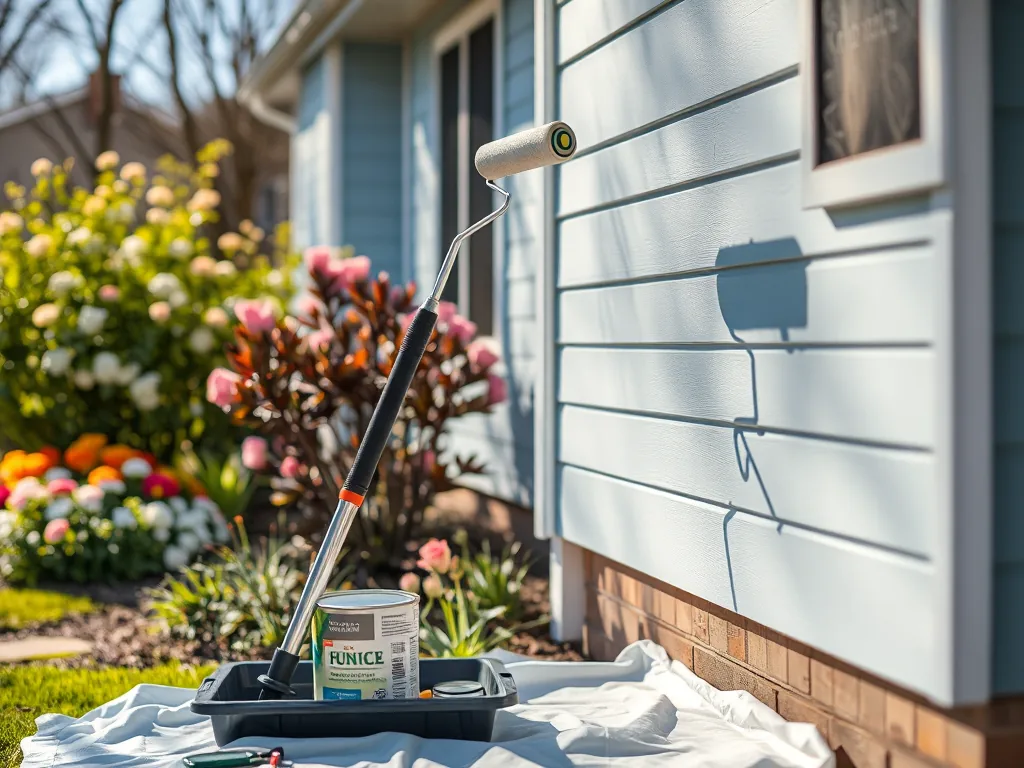
Find a verified pro near you →Everyone says spring is the perfect time to paint your home’s exterior. Pros say it’s more complicated than that — and painting at the wrong moment in spring can actually ruin the finish. The internet is full of advice saying “paint in spring!” without mentioning that spring brings the three conditions painters dread most: fluctuating temperatures, morning dew, and pollen. A properly timed exterior paint project lasts 7–10 years. A poorly timed one starts peeling in 18 months.
Here’s what professional painters actually look at when scheduling exterior work, why the “sweet spot” isn’t a season but a set of conditions, and how to get the best price on a project that lasts. For full pricing details by home size and siding type, see our exterior painting cost guide.
Check your inbox for a confirmation email.
Average (2,000 sq ft): $4,500–$7,500
Large (3,000+ sq ft): $7,500–$10,000+
The real painting sweet spot isn’t “spring” — it’s any stretch of 3–5 consecutive days where temperatures stay between 50°F and 85°F, humidity is below 70%, no rain is forecast, and surfaces have dried from morning dew. In most of the U.S., this happens in late April through May and again in September through mid-October. Early spring (March–early April) rarely meets all four conditions simultaneously.
The 3 Spring Conditions That Ruin Paint
Skipping the DIY route? You can post the job on AllBetter and have Stripe-verified pros bidding within the hour — no lead fees, no spam calls, payment held in escrow until you approve the work.
Spring days can hit 72°F by 2 PM and drop to 38°F overnight. Latex paint needs the temperature to stay above 50°F for at least 4 hours after application to cure properly. If nighttime temps dip below that threshold, the paint film forms incorrectly — it looks fine for a few months, then cracks, blisters, or peels. Oil-based paints are slightly more forgiving (down to 40°F), but the same principle applies. Professional painters check the 48-hour forecast, not just the afternoon high.
Painting on a damp surface is the most common cause of premature paint failure. Spring mornings produce heavy dew that takes 2–4 hours to evaporate from north-facing walls. April showers aren’t just an inconvenience — rain within 4 hours of application washes the paint’s binders out of the film, leaving a chalky, weak surface. Pros won’t start painting until 10 AM on spring mornings and stop by 4 PM to allow drying before evening humidity rises.
In the Southeast and Mid-Atlantic, pollen season peaks in March and April. That yellow-green film coating every car and porch also coats freshly prepped surfaces. Painting over pollen creates a barrier between the paint and the surface — the paint adheres to the pollen, not the wall. Power washing removes pollen, but if the count is high enough, new pollen settles on the clean surface within hours. Pros in heavy-pollen regions push exterior work to late April or early May, after peak pollen passes.
When Pros Actually Schedule Exterior Work
Ready to get it done? Post your job on AllBetter, compare verified bids, and pay only when you approve the finished work.
Find a verified pro near you →A painting contractor in Nashville shared his annual schedule: March is for estimates and interior work. Early April is prep — power washing, scraping, caulking, priming bare wood. Actual painting starts in the last week of April once overnight temps reliably stay above 50°F. His busiest months are May, June, and September. July and August slow down because extreme heat (above 85°F) causes paint to dry too fast, leaving brush marks and lap lines.
- Temp: 55–80°F daytime, 50°F+ overnight
- Humidity: 40–60%
- Dew: Light, evaporates by 9–10 AM
- Pollen: Low to moderate
- Pricing: Standard rates
- Result: 7–10 year paint life
- Temp: Below 50°F overnight or above 85°F
- Humidity: Above 70% or heavy dew
- Dew: Persistent, north walls stay wet
- Pollen: Peak in March–April (South/East)
- Pricing: Peak in June–July (+10–20%)
- Result: 3–5 year paint life
How to Get a Better Price on Exterior Painting
Timing isn’t just about weather — it’s about contractor demand. Here are four ways to lower your cost without sacrificing quality:
- Book in March for a late April start. Painters are quoting but not fully booked yet. You get first pick of crews and standard pricing.
- Schedule for September. Many homeowners don’t realize fall is ideal painting weather. Humidity drops, temps stabilize, and painters are less booked than in May–June.
- Bundle interior + exterior. Painters offer 10–15% discounts when you combine projects because they can schedule around weather — interior on rainy days, exterior when it’s dry.
- Get 3+ quotes. Pricing varies 30–50% between painters for the same scope. Compare bids from verified painters on AllBetter — free to post for homeowners, with escrow-protected payments so you never overpay.
For Painters: How to Price Spring Exterior Work
If you’re a painting contractor, spring pricing requires accounting for weather delays. Here’s how experienced painters handle it:
- Build weather days into your quote. A 5-day exterior project in April realistically takes 7–8 days with rain delays. Quote the actual timeline, not the ideal one. Homeowners respect honesty more than a lowball that leads to frustration. Understanding how to create a painting quotation that accounts for spring variables protects your margins.
- Use early spring for prep work. March and early April are perfect for power washing, scraping, caulking, and priming. By the time painting weather arrives, you can start applying coats immediately — faster turnaround, happier clients.
- Educate your clients. When a homeowner asks why you won’t paint in 45°F weather, explain the curing science. Clients who understand the “why” become referral sources because they see you as a professional, not someone making excuses.
- Reach homeowners actively looking for painters. List your services on AllBetter — $0 lead fees, escrow-protected payments, and you only bid on projects you want. Use proven strategies to get more painting customers this season.
Post your painting project on AllBetter. Compare 3+ bids from identity-verified painters. Free to post for homeowners — every payment is escrow-protected.
Hire an ID-verified painting pro — without the lead-gen markup
| Feature | Angi / Thumbtack / HomeAdvisor | AllBetter |
|---|---|---|
| Pro Identity Verified | Self-attested, no verification | Stripe Identity verification on every pro |
| Lead Fees to Pros | $15–$80 per lead (passed back to homeowner) | $0 lead fees — ever |
| Payment Protection | None — you pay direct, hope for the best | Escrow Shield — you only release payment when work is approved |
| Pro Quality Filter | Anyone can sign up; reviews come later | ID-verified pros, average 3+ bids per job |
| Spam & Auto-Calls | Your phone rings for days after one inquiry | Zero spam — pros message in-platform |
Lead-fee context: painting leads on traditional platforms run $20-$80 each — that markup gets baked into your quote.
DIY-ing painting work without an ID-verified pro can turn a $200 fix into a $2,000 do-over — and the quality issues only show up months later. The safer move is to post the job on AllBetter — you get ID-verified bids in minutes, no obligation.
No payment until you approve the work. Escrow Shield protects every transaction.
Frequently Asked Questions
What temperature is too cold to paint outside?
For standard latex paint, temperatures below 50°F are too cold — the paint won’t cure properly and will crack or peel within months. Oil-based paints can tolerate down to 40°F. Some premium formulas work in temperatures as low as 35°F, but cost 40–60% more per gallon. Always check the manufacturer’s minimum temperature on the paint can, and remember that overnight lows matter as much as daytime highs.
How much does it cost to paint a house exterior in 2026?
Exterior house painting costs $2,500–$10,000+ in 2026, depending on home size, siding type, number of stories, and prep work needed. The average 2,000 sq ft home costs $4,500–$7,500. Peak-season pricing (June–July) runs 10–20% higher than scheduling in late April, May, or September. Labor is typically $25–$50 per hour per painter.
Is spring or fall better for exterior painting?
Fall (September through mid-October) is often better than early spring for exterior painting. Fall has more stable temperatures, lower humidity, minimal pollen, and shorter contractor waitlists. Late April through May is the next best window — overnight temps are reliably above 50°F and spring rains begin tapering off. Early spring (March) is the riskiest due to temperature swings and pollen.
How long does exterior paint last?
Properly applied exterior paint lasts 7–10 years on wood siding, 10–15 years on fiber cement (like HardiePlank), and 15–20 years on vinyl and aluminum. These timelines assume correct surface prep, appropriate weather conditions during application, and quality paint. Paint applied in poor conditions (cold, wet, high pollen) may start failing in 2–3 years regardless of paint quality.
Can you paint over peeling paint?
No. Peeling paint must be scraped off, the surface sanded smooth, and bare areas primed before new paint is applied. Painting over peeling paint traps moisture and the new coat will peel even faster. Proper prep is 60–70% of a quality paint result — cutting corners on prep is the most common reason paint fails prematurely.
How long after rain can you paint outside?
Wait at least 24–48 hours after rain before painting exterior surfaces. Wood siding may need 48+ hours to dry completely, especially on north-facing walls that get less sunlight. Use a moisture meter if you’re unsure — the surface should read below 15% moisture content. Painting on damp surfaces causes bubbling, poor adhesion, and premature peeling.
How many coats of paint does a house exterior need?
Most exterior repaints need 2 coats for full coverage and durability. If changing from a dark to a light color (or vice versa), you may need a tinted primer plus 2 topcoats (3 coats total). Bare wood or new siding always needs 1 coat of primer plus 2 topcoats. One coat may look acceptable initially but won’t hold up — manufacturers’ warranties typically require 2 coats minimum.
According to BLS — Occupational Outlook Handbook, BLS: home services demand continues to grow; quality + identity verification are the homeowner’s only baseline filters.
More AllBetter resources:
Skip the DIY Risk
Don’t risk paying twice because the first contractor wasn’t checked out.
Post your job on AllBetter today. You don’t pay a dime until a Stripe-verified pro shows up, you approve in-app, Escrow Shield releases payment — backed by Escrow Shield.
Stripe-verified pros · $0 lead fees · Escrow Shield protection