

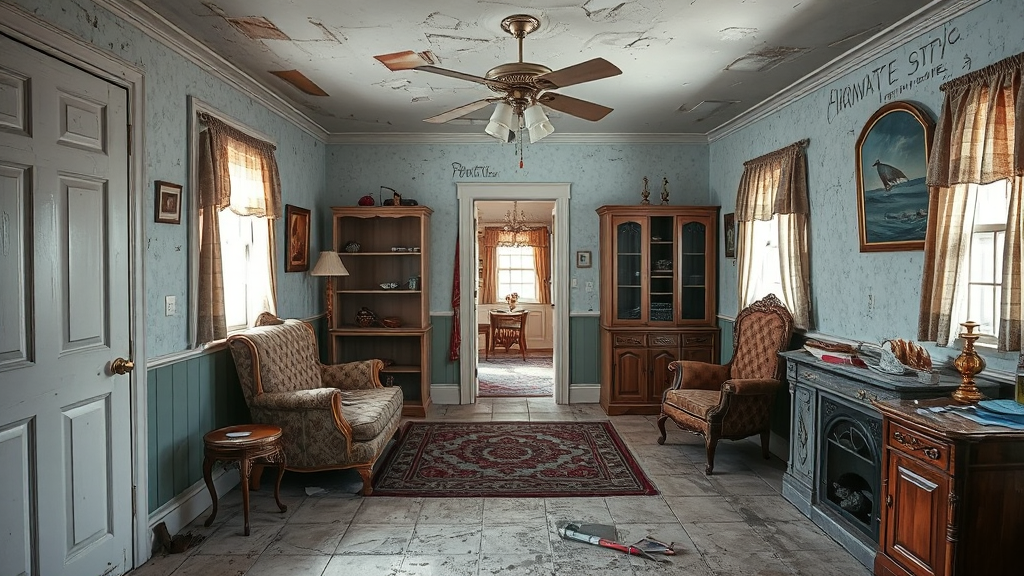
A hairline crack in drywall costs $200 to patch. The same crack ignored for two years can become a structural wall repair north of $8,000. That math scales across every part of a house — and most homeowners miss the warning signs until the repair bill has already turned into a remodel bill. Here are the five signs your home is telling you it’s time to act, ranked by what they cost when ignored.
On AllBetter
Need a local pro?
Post the job free and compare bids from identity-verified local pros — payment held in escrow until the work is done right.
Find a verified pro near you →How do you know when your home needs remodeling? Watch for five early signals: unexplained wall cracks or discoloration, floors that creak, dip, or feel soft underfoot, active or recent water leaks, paint or wallpaper that chips faster than normal, and kitchens or bathrooms older than 15 years. Each costs more the longer you wait — often 3–10x the original repair once deferred past the warning window.
The 5 signs your home needs remodeling
On AllBetter
Ready to get it done?
Fund escrow before work starts. Release payment when you approve the finished work.
Find a verified pro near you →- Wall decay and cracks
- Flooring damage
- Leaks
- Chipped paint and wallpaper damage
- Outdated kitchen and bathroom
Each section below covers what the sign actually means, what it costs to fix early, and what it costs once it’s been ignored. Before any of it, see our breakdown on how to calculate the value of home improvements before you begin so you spend on what actually pays back.
1. Wall decay and cracks
Cracks in drywall and decaying wall surfaces are usually the first warning. They’re visible, they drag down the look of every room, and even superficial ones make buyers and appraisers assume worse problems underneath.
Small cracks near windows and door frames usually mean settling — cosmetic and inexpensive to patch. But horizontal cracks in load-bearing walls, stair-step cracks in brick or block, or cracks wider than 1/4 inch signal structural movement that needs a professional look. A structural engineer’s evaluation runs $300–$600 and can save you from a $20,000+ foundation repair bill later.
Water stains on walls or ceilings are never just cosmetic. They mean active moisture intrusion that will grow mold within 48–72 hours if you don’t trace the source. Always find the leak before you paint over the stain.
2. Flooring damage
Floors are the second sign — and the one where remodeling budgets quietly explode. Deeply scratched hardwood, cracked tile, or worn carpet drag down the whole interior, but a full replacement isn’t always the answer. Refinishing hardwood ($3–$5/sq ft) often delivers 80% of the visual impact of a full tear-out at a fraction of the price.
Soft spots in hardwood or subfloor are the warning you can’t ignore. Any give or bounce underfoot means the subfloor needs inspection — especially in kitchens and bathrooms, where moisture damage hides until it rots. Subfloor replacement runs $2–$7 per square foot. Letting it go leads to structural compromise and mold that multiplies the repair cost 5–10x.
For full-house replacement, luxury vinyl plank ($3–$7/sq ft installed) is the best blend of durability, water resistance, and look. Get three bids before you commit — flooring is one of the trades where the first per-square-foot quote is rarely the real price.
3. Leaks
Water damage destroys home value faster than anything else, and the most expensive leaks are the ones you can’t see. Check ceilings for cracking paint after every heavy rain. Check under every sink. Check around the water heater. If you have a fireplace, get the chimney inspected every other year — a $200 inspection wards off a $5,000 masonry bill.
Slab leaks (pipes beneath concrete foundations) waste hundreds of gallons per day and shift foundations before any visible sign appears. Watch your water bill — an unexplained $20–$50/month jump usually means a hidden leak. Electronic leak detection costs $150–$400 and pinpoints the exact spot without tearing up your floors.
Roof leaks get exponentially more expensive the longer they wait. A $200 patch becomes a $5,000 section replacement becomes a $15,000 full reroof. Annual roof inspections and quick flashing/shingle repairs are the cheapest insurance you’ll ever buy.
4. Chipped paint and wallpaper damage
Chipped paint and peeling wallpaper are the easiest signs to spot and usually the first thing visitors notice. Wall finishes are the single biggest piece of interior impression — and a fresh coat of paint is one of the highest-ROI improvements on the entire list. Expect $200–$500 per room and 1–3% added to perceived home value.
If paint is chipping faster than it should — within a year or two of being applied — the cause is almost never the paint. It’s moisture behind the wall, improper prep, or settling cracks reopening. Fix the cause before you repaint, or you’ll pay twice.
5. Outdated kitchen and bathroom
Kitchens and bathrooms older than 15 years are the fifth sign — and the one with the highest ROI when you do remodel. Minor kitchen updates recoup 75–100% of their cost at resale. The elements that move the needle: countertops, cabinet fronts, appliances, and faucets. A full kitchen remodel runs $15,000–$75,000 depending on scope, but cosmetic-only refreshes ($5,000–$15,000) deliver the best return per dollar.
Bathrooms follow the same logic. Outdated bathrooms actively reduce home value; modern updates with clean tile, new fixtures, and proper ventilation add $10,000–$30,000 in perceived value. A mid-range bathroom remodel costs $10,000–$30,000 and recoups 60–80% at resale. Prioritize functionality first — plumbing, ventilation, waterproofing — then aesthetics. You don’t always need a full gut renovation; swapping faucets, adding a tile backsplash, and upgrading cabinet hardware can modernize a kitchen for under $1,000.
For a wider view of which projects pay back, see our list of the top home renovations that yield the best ROI for resale.
How AllBetter compares to lead-gen sites
If you’ve hired through Angi, Thumbtack, or HomeAdvisor before, you already know the pattern: $15–$80 lead fees baked into your quote, self-attested pros with reviews that show up after the job is done, no payment protection, and a phone that won’t stop ringing for days after one inquiry. AllBetter is built the opposite way — Stripe Identity verification on every pro, only pay when you win, Escrow Shield that holds your payment until you approve the work, and zero outbound calls (pros message in-platform). You post the project on AllBetter and the ID-verified pros come to you.
Quick reference — the 5 signs
Frequently asked questions
How do I know if my home needs remodeling?
Look for five signs: wall cracks and decay, flooring damage or soft spots, persistent leaks, chipped paint or wallpaper damage, and outdated kitchens or bathrooms. Any of these means the home is losing value and may develop more expensive problems if left unaddressed.
Which home renovation has the highest ROI?
Minor kitchen remodels consistently deliver the highest return on investment at 75 to 100 percent cost recovery at resale. Curb appeal improvements like landscaping and exterior paint can exceed 100 percent ROI for relatively low investment.
Should I renovate before selling my home?
Focus on high-ROI cosmetic updates: fresh paint, modern light fixtures, landscaping, and kitchen or bathroom refreshes. Avoid major structural renovations before selling unless they address safety issues that would fail inspection.
How much should I budget for a home renovation?
Budget 15 to 20 percent more than your initial estimate to cover unexpected issues. For a mid-range kitchen remodel, expect $15,000 to $75,000. For bathroom updates, $10,000 to $30,000. Always get at least three contractor bids before committing.
When should I call a professional vs. DIY?
DIY is appropriate for cosmetic work like painting, hardware replacement, and minor landscaping. Always use licensed professionals for structural work, electrical, plumbing, and anything requiring permits. The cost of fixing a bad DIY job usually exceeds the cost of booking a pro from the start.