

avg. cost of winter damage found in spring
optimal window for post-winter inspection
typical spring maintenance budget
Skipping spring maintenance after winter is one of the most expensive mistakes homeowners make. The Insurance Information Institute reports that water damage and freezing claims average $12,514 per incident — and most of these start as small problems that a spring inspection would have caught. A gutter full of debris becomes foundation damage. A cracked shingle becomes a ceiling leak. An aging HVAC filter becomes a $5,000 compressor failure in July.
On AllBetter
Need a local pro?
Post the job free and compare bids from identity-verified local pros — payment held in escrow until the work is done right.
Find a verified pro near you →What should a spring home maintenance checklist include? A complete spring checklist covers five systems: roof and gutters, exterior envelope (siding, foundation, caulking), HVAC and air quality, plumbing inspection, and outdoor structures and landscaping. Completing these tasks in March through May prevents the most common warm-season failures and protects your home’s value year-round.
Why Spring Is the Highest-ROI Maintenance Window
Skipping the DIY route? You can post the job on AllBetter and have ID-verified pros bidding in about 10 minutes — no spam calls, payment held in escrow until you approve the work.
Related read: The hidden spring plumbing problem that costs homeowners $8,000+
Related read: What garage door repairs actually cost in 2026 — springs, openers, and panels priced
Winter exposes every weakness in a home’s exterior — freeze-thaw cycles crack foundations, ice dams damage roofing, and snow loads stress gutters and downspouts. Spring is the recovery window where small fixes prevent cascading damage.
Related: snow plowing services near you
The American Society of Home Inspectors recommends conducting a thorough home inspection every spring because temperature changes between seasons cause the most structural movement. Catching damage in April costs a fraction of discovering it in August when the problem has compounded for months.
From a budgeting perspective, spring maintenance also gives you the advantage of scheduling work before contractor demand peaks in summer. According to the National Association of Home Builders, labor rates for home improvement projects increase 10% to 20% during peak summer months due to demand. Booking preventive work in spring means lower prices and better availability.
The Complete Spring Home Maintenance Checklist
Exterior: Roof, Gutters, and Foundation
These are the highest-priority items because water infiltration causes the most expensive damage.
A spring inspection that catches winter damage early costs a fraction of what the same issues cost when discovered months later — after secondary damage has compounded.
- Inspect the roof from the ground — use binoculars to check for missing, cracked, or curling shingles. Look for flashing damage around chimneys, vents, and skylights. If you spot problems, schedule a professional roof assessment before spring rains begin
- Clean gutters and downspouts — remove leaves, twigs, and debris that accumulated over winter. Flush downspouts with a garden hose to confirm they drain away from the foundation. Clogged gutters are the number one cause of basement water intrusion
- Examine the foundation — walk the perimeter and look for new cracks, water staining, or soil erosion near the base. Grade soil so it slopes away from the foundation at a minimum of 6 inches over 10 feet
- Check siding and exterior paint — look for peeling, cracking, blistering, or gaps in caulking around windows and doors. Seal any openings to prevent moisture and pest entry
HVAC and Indoor Air Quality
Your heating system worked all winter. Now it needs attention before you switch to cooling mode.
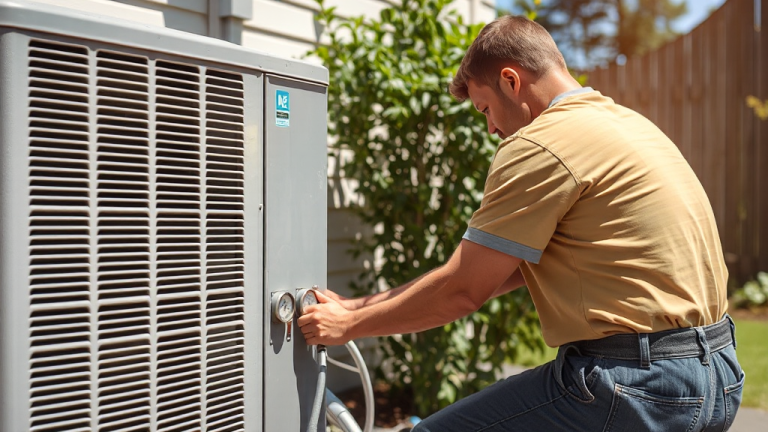
- Schedule an HVAC tune-up — a professional service includes refrigerant level check, coil cleaning, electrical connection tightening, and thermostat calibration. Spring service ensures your air conditioning runs efficiently when summer heat arrives
- Replace air filters — if you have not changed the filter since fall, do it now. A clogged filter forces the system to work harder, increasing energy costs by 5% to 15% according to the Department of Energy
- Test carbon monoxide and smoke detectors — press the test button on every unit, replace batteries, and replace detectors older than 7 years (smoke) or 5 years (CO)
- Open and inspect windows — check that all windows open, close, and lock properly. Inspect weather stripping and replace if worn. Clean window tracks to prevent drainage blockage
Plumbing and Water Systems
Freeze-thaw cycles stress pipes, joints, and fixtures throughout winter.
- Inspect exposed pipes — check the basement, crawl space, and under sinks for signs of leaks, corrosion, or condensation
- Test water pressure — attach a gauge to an outdoor hose bib. Normal residential pressure is 40 to 80 psi. Pressure above 80 psi damages fixtures over time and may indicate a failing pressure regulator
- Flush the water heater — sediment accumulates at the bottom of the tank and reduces efficiency. Drain two to three gallons through the drain valve into a bucket. If the water runs cloudy, continue flushing until clear
- Check outdoor faucets — turn on each hose bib and check for leaks at the handle and spout. A dripping outdoor faucet may indicate a cracked pipe inside the wall from winter freezing
Outdoor Structures and Landscaping
Winter weather damages decks, fences, and hardscaping that need spring repair. Spring is also the standard slot for a professional window clean after a winter of grime.
- Inspect decks and patios — check for loose boards, popped nails, rotting wood, and unstable railings. Power wash surfaces and apply sealant if the wood no longer beads water when splashed
- Check fences and gates — test for loose posts, leaning sections, and damaged hardware. Reset posts in concrete if they wobble
- Trim trees and shrubs — remove dead branches, especially those within 10 feet of the roof or touching the house. Overhanging branches drop debris into gutters and provide pest access to the attic
- Prepare the lawn — rake dead thatch, aerate compacted soil, apply pre-emergent weed control, and overseed bare patches. Spring aeration gives grass roots access to water and nutrients before summer heat stress
Spring Maintenance Cost Estimates (2026)
On AllBetter
Ready to get it done?
Fund escrow before work starts. Release payment when you approve the finished work.
Find a verified pro near you →| Task | DIY Cost | Professional Cost |
|---|---|---|
| Gutter cleaning (2-story home) | $0 (ladder + gloves) | $150–$300 |
| HVAC tune-up | Filter only: $15–$30 | $100–$200 |
| Water heater flush | $0 (garden hose) | $80–$150 |
| Deck power wash + seal | $50–$100 (rental + sealant) | $300–$600 |
| Window caulking and weatherstrip | $20–$50 | $150–$400 |
| Lawn aeration | $50–$80 (rental) | $100–$200 |
A full professional spring maintenance package covering all exterior and HVAC tasks typically costs $500 to $1,200. Bundling multiple tasks into a single service call reduces the per-task cost significantly — most handyman professionals offer multi-task pricing.
The 5-Step Spring Maintenance Execution Plan
Use this sequence to work through your checklist efficiently without missing critical items.
Step 1: Walk the property (30 minutes) — Walk the full exterior perimeter with a notebook. Check the roof from the ground, inspect the foundation, test outdoor faucets, and note any visible damage to siding, windows, or structures.
Step 2: Prioritize by risk (15 minutes) — Sort your findings into three categories: water-related (highest priority), safety-related (smoke detectors, railings, electrical), and cosmetic (paint, landscaping). Address water issues first — they cause the most expensive secondary damage.
Step 3: Handle DIY tasks first (one weekend) — Clean gutters, replace HVAC filters, flush the water heater, test detectors, clean windows, and rake the lawn. These tasks require no special skills and collectively prevent the majority of seasonal damage.
Related: a lawn care crew near you
Step 4: Book professionals for skilled work — HVAC tune-ups, roof repairs, plumbing inspections, and electrical safety checks require licensed professionals. On platforms like AllBetter, you can post all your spring maintenance needs in a single request, compare quotes from local professionals, and schedule work when it fits your calendar — avoiding the premium pricing that comes with summer rush.
Step 5: Document and schedule (15 minutes) — Photograph completed work for insurance records. Set calendar reminders for fall follow-up tasks. A consistent year-round maintenance schedule turns reactive homeownership into planned, predictable spending.
Common Spring Maintenance Mistakes
- Ignoring gutters because they look fine from the ground — debris compacts over winter and is often invisible until water backs up. Always physically check or flush gutters in spring
- Skipping the HVAC tune-up because heating worked fine all winter — the cooling system has separate components that may have degraded. A system that heated well can still fail to cool
- Waiting until something breaks to call a professional — emergency service calls cost 50% to 100% more than scheduled maintenance. Spring is the time to identify problems, not summer when every contractor is booked
- Pressure washing everything at maximum power — high pressure damages wood siding, vinyl, and composite decking. Use the lowest effective pressure setting and test on an inconspicuous area first
- Neglecting indoor air quality after keeping windows sealed all winter — dust, allergens, and stale air accumulate. Open windows on mild days, clean vents, and consider having ductwork cleaned if it has been more than 3 years
Avoiding these mistakes is easier when you understand the essential maintenance skills that every homeowner should develop. And for homeowners building their first seasonal maintenance routine, spring is the ideal starting point because it addresses the most damage-prone transition period of the year.
Ready to protect your home investment?
AllBetter connects homeowners with verified, identity-verified pros — with escrow payment protection built in. AllBetter is a newer platform with a smaller but growing marketplace, offering only pay when you win for contractors.
Hire an ID-verified home services pro — without the lead-gen markup
| Feature | Angi / Thumbtack / HomeAdvisor | AllBetter |
|---|---|---|
| Pro Identity Verified | Self-attested, no verification | Stripe Identity verification on every pro |
| Lead Fees to Pros | $15–$80 per lead (passed back to homeowner) | only pay when you win — ever |
| Payment Protection | None — you pay direct, hope for the best | Escrow Shield — you only release payment when work is approved |
| Pro Quality Filter | Anyone can sign up; reviews come later | ID-verified pros, average 3+ bids per job |
| Spam & Auto-Calls | Your phone rings for days after one inquiry | Zero spam — pros message in-platform |
Spring is one season of the cycle. For the rest of the year, follow the full home maintenance tips for homeowners guide — it covers all five home systems on a season-by-season schedule.
Frequently Asked Questions
What is the single most important spring maintenance task?
Cleaning gutters and verifying proper drainage away from the foundation. Water infiltration causes more expensive damage than any other seasonal issue — foundation repairs alone average $4,500 to $15,000 when drainage problems go unaddressed.
How much should I budget for spring home maintenance?
Plan for $500 to $1,500 depending on home size and age. Newer homes (under 10 years) tend toward the lower end. Homes over 20 years old should budget higher because aging systems require more attention. This investment prevents emergency repairs that cost five to ten times more.
When should I schedule spring maintenance tasks?
Start exterior inspections as soon as snow melts and ground thaws — typically March in most regions. Schedule HVAC service for April, before cooling season demand increases. Complete all outdoor tasks by mid-May.
Can I do spring maintenance myself or do I need a professional?
Most homeowners can handle 60% to 70% of spring maintenance — gutter cleaning, filter replacement, water heater flushing, caulking, and landscaping. HVAC tune-ups, roof repairs, plumbing inspections, and electrical checks require licensed professionals for both safety and warranty compliance.
What spring maintenance tasks prevent the most expensive repairs?
Gutter cleaning prevents foundation damage ($4,500 to $15,000). HVAC service prevents compressor failure ($3,000 to $7,000). Roof inspection prevents interior water damage ($5,000 to $20,000). These three tasks together cost under $600 and prevent potential damages exceeding $40,000.
Should I get a professional home inspection every spring?
A full professional inspection is not necessary every year for most homes. However, if your home is over 30 years old, you have had previous water or structural issues, or you are preparing to sell, an annual professional inspection costing $300 to $500 provides documentation and catches problems that homeowner walkthroughs miss.
DIY-ing home services work without an ID-verified pro can turn a $200 fix into a $2,000 do-over — and the quality issues only show up months later. The safer move is to post the job on AllBetter — you get ID-verified bids in minutes, no obligation.
Your money sits in escrow and is released only when you approve the work.