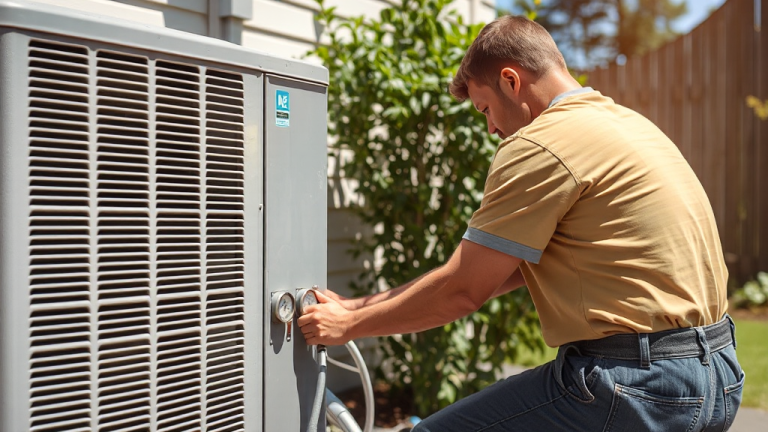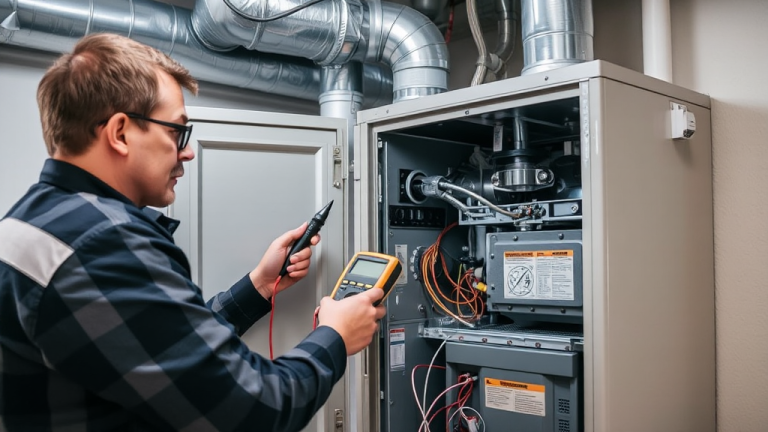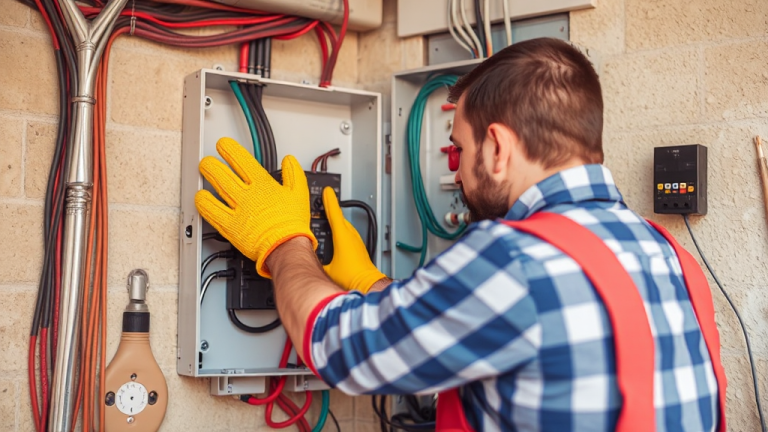

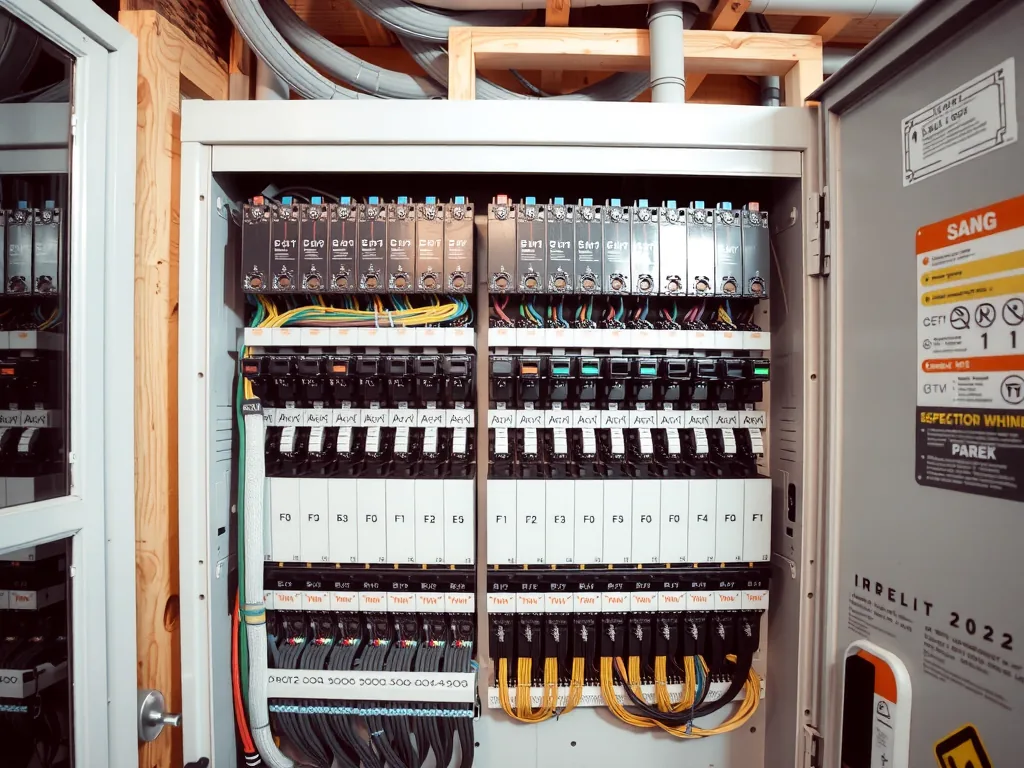
Your electrical system is about to face its hardest test of the year — and most homeowners don’t realize it until something trips, sparks, or fails. The transition from heating season to cooling season puts a different kind of load on your panel, wiring, and circuits. Air conditioners draw 15–20 amps per unit. Pool pumps add another 10–15. EV chargers pull 30–50. By June, your electrical system is running near capacity — and that’s when aging panels, overloaded circuits, and loose connections announce themselves.
On AllBetter
Need an electrician?
Post the job free and compare bids from identity-verified local pros — payment held in escrow until the work is done right.
Find an electrician near you →See also: EV charger installation near you
Related: a panel upgrade electrician near you
April is when electricians have availability, pricing is standard, and problems can be fixed before summer puts your system under sustained load. Here’s what to check, what it costs, and why every electrician in the country would rather see you now than in August.
April is also when AC systems get sabotaged by good intentions — here’s the $4,000 AC mistake made every April and the cheap fix that avoids it.
Circuit Repairs: $200–$800
Panel Upgrade: $1,500–$4,000
A spring electrical inspection evaluates your panel capacity, circuit loads, grounding, GFCI/AFCI protection, and wiring condition before summer’s heavy demand begins. It takes 1–2 hours and costs $150–$300. The inspection identifies overloaded circuits, outdated panels, loose connections, and code violations — problems that cause fires, equipment damage, and power outages during peak summer usage. For full pricing details, see our electrical panel upgrade cost guide.
The Summer Surge Problem
Skipping the DIY route? You can post the job on AllBetter and have ID-verified pros bidding in about 10 minutes — no spam calls, payment held in escrow until you approve the work.
Picture a 100-amp panel installed in 1992 — perfectly adequate for that era. Over the years, they added central AC (30 amps), a home office with multiple monitors (15 amps), an EV charger (40 amps), and a hot tub (50 amps). The math stopped working. In July 2025, during a 115°F heat wave, the main breaker tripped repeatedly. The emergency electrician (3-day wait, $450 service call) diagnosed the obvious: the panel was running at 135 amps on a 100-amp service. The emergency panel upgrade cost $4,800 — including rush labor and a weekend permit fee. The same upgrade in April? $2,400 with standard scheduling. Understanding how electrical work is priced helps you avoid paying emergency premiums.
5 Things to Check Before Summer
If your home still has a 100-amp panel and you’ve added AC, an EV charger, or any major appliance since it was built, you may be running over capacity. Modern homes need 200 amps minimum. A panel upgrade from 100 to 200 amps costs $1,500–$4,000 — and it’s the single most important electrical upgrade for homes built before 2000. If your breakers trip during high-load periods (running AC + dryer + oven simultaneously), your panel is telling you it’s overloaded.
Federal Pacific, Zinsco, and Pushmatic panels have documented failure rates above 25% — they don’t trip when they should, creating fire hazards. If your panel has any of these brand names, replace it immediately regardless of age. These panels fail silently: the breaker looks normal but doesn’t actually protect the circuit. A home inspector should have flagged this, but many miss it.
GFCI outlets (the ones with test/reset buttons) are required in bathrooms, kitchens, garages, outdoor areas, and basements. AFCI breakers protect bedrooms and living areas from arc faults — the leading cause of electrical fires. Test every GFCI outlet monthly by pressing “test” (power should cut) then “reset.” Non-functional GFCIs cost $100–$200 each to replace. Adding AFCI protection to existing circuits runs $40–$100 per breaker.
Winter weather damages outdoor outlets, landscape lighting connections, and pool/spa electrical. Inspect all outdoor receptacles for water intrusion, verify weather covers are intact, test GFCI protection on every outdoor circuit, and check landscape lighting for damaged wiring. Exposed wiring in wet spring conditions is a shock hazard. Outdoor electrical repairs run $150–$500.
If you’re planning an EV purchase or already charge on a Level 1 outlet, spring is the time to install a Level 2 charger. A dedicated 240V, 50-amp circuit with a Level 2 charger cuts charge time from 24+ hours to 4–8 hours. Installation costs $500–$2,000 depending on panel distance and whether a panel upgrade is needed. The federal 30C credit (30% of cost, up to $1,000) applies only to chargers placed in service by June 30, 2026, in eligible areas; check IRS.gov before counting on it. See our full EV charger installation cost guide.
For Electricians: Why Spring Inspections Build Your Summer Pipeline
On AllBetter
Ready to get it done?
Fund escrow before work starts. Release payment when you approve the finished work.
Find an electrician near you →If you’re an electrician, spring inspection calls are the most valuable leads of the year. Here’s why:
- Inspections convert to upgrades. Over 40% of spring inspections reveal actionable issues — panel upgrades, GFCI replacements, circuit additions. A $200 inspection often leads to $1,500–$4,000 in follow-up work.
- You set the timeline. April work is scheduled, not emergency. You control your calendar, crew allocation, and margins.
- Recurring clients. A homeowner who trusts you with their inspection calls you first for every future electrical need — EV chargers, remodels, additions.
- List your services on AllBetter to reach homeowners actively looking for spring electrical work — only pay when you win, escrow-protected payments, and you only bid on projects you want.
Book Your Inspection Now
April availability is still good for most electricians. By June, they’re deep into AC-related calls, summer remodel projects, and emergency work. Compare bids from identity-verified electricians near you on AllBetter — free to post for homeowners, with every payment escrow-protected.
Post your electrical project on AllBetter. Compare 3+ quotes from identity-verified electricians. Free to post for homeowners.
Hire an ID-verified electrical pro — without the lead-gen markup
| Feature | Angi / Thumbtack / HomeAdvisor | AllBetter |
|---|---|---|
| Pro Identity Verified | Self-attested, no verification | Stripe Identity verification on every pro |
| Lead Fees to Pros | $15–$80 per lead (passed back to homeowner) | only pay when you win — ever |
| Payment Protection | None — you pay direct, hope for the best | Escrow Shield — you only release payment when work is approved |
| Pro Quality Filter | Anyone can sign up; reviews come later | ID-verified pros, average 3+ bids per job |
| Spam & Auto-Calls | Your phone rings for days after one inquiry | Zero spam — pros message in-platform |
Lead-fee context: electrical leads on traditional platforms run $20-$80 each — that markup gets baked into your quote.
DIY-ing electrical work without an ID-verified pro can turn a $200 fix into a $2,000 do-over — and the quality issues only show up months later. The safer move is to post the job on AllBetter — you get ID-verified bids in minutes, no obligation.
Your money sits in escrow and is released only when you approve the work.
Frequently Asked Questions
How much does a home electrical inspection cost?
A comprehensive electrical inspection costs $150–$300 for most homes. It covers panel evaluation, circuit load testing, GFCI/AFCI checks, grounding verification, and a visual wiring assessment. Some electricians offer free inspections if you book follow-up work.
How do I know if my electrical panel needs an upgrade?
Your panel likely needs an upgrade if: breakers trip frequently during high-use periods, your panel is rated at 100 amps or less and you’ve added major appliances, it’s a Federal Pacific, Zinsco, or Pushmatic brand, or you’re planning to add an EV charger, hot tub, or home addition.
How much does an electrical panel upgrade cost?
Upgrading from 100 to 200 amps costs $1,500–$4,000 depending on your location, the complexity of the installation, and whether the utility company needs to upgrade the service entrance. Emergency upgrades during summer cost 25–50% more due to rush scheduling.
Are Federal Pacific panels dangerous?
Yes. Federal Pacific Electric (FPE) Stab-Lok panels have a documented failure rate above 25%, meaning 1 in 4 breakers may not trip during an overload. This creates a fire hazard. If your home has an FPE panel, replacement is strongly recommended regardless of the panel’s age or apparent condition.
How much does EV charger installation cost?
A Level 2 EV charger installation costs $500–$2,000 including the charger unit, a dedicated 240V/50-amp circuit, and permitting. Costs are higher if the panel is far from the garage or if a panel upgrade is needed. The federal 30C credit (30%, up to $1,000) applies only to chargers placed in service by June 30, 2026, in eligible areas.
How often should I test GFCI outlets?
Test every GFCI outlet monthly by pressing the “test” button (power should cut immediately) then pressing “reset” to restore power. If the outlet doesn’t trip when tested or won’t reset, replace it immediately — a non-functional GFCI provides no shock protection. Replacement costs $100–$200 per outlet.
What electrical work can I do myself?
Homeowners can safely replace light switches, outlets (with the breaker off), light fixtures, and test GFCI outlets. Anything involving the panel, new circuits, wiring modifications, or outdoor electrical must be done by a licensed electrician with a permit. Unpermitted electrical work can void your homeowner’s insurance and create liability during a home sale.
More AllBetter resources: