
Artificial intelligence is entering home services, but not in the way the marketing decks promise. AI is not diagnosing your hidden leak or rewiring your 1920s panel. What it actually does is collapse the administrative overhead around the work — matching homeowners with available pros in minutes instead of days, generating data-informed estimate ranges, automating scheduling, and processing escrow-protected payments.
This guide covers what AI actually does in home services today, where it delivers measurable value, where the marketing claims outpace the reality, and how homeowners and contractors should evaluate AI-powered platforms.
Don’t want to DIY? Skip the lead-gen markup.
Check your inbox for a confirmation email.
Post the job on AllBetter and get ID-verified bids in minutes. only pay when you win, Escrow Shield on every transaction.
What AI Actually Does in Home Services
The term “AI” in home services marketing covers everything from basic automation to genuine machine learning. Understanding the distinction prevents both overestimating what platforms deliver and underestimating where real AI creates value.
Automated matching and scheduling. The most immediate AI application is contractor-homeowner matching. Rather than calling individual providers from a directory, homeowners post a project once and the platform notifies verified pros in the area who match the category and location. AllBetter’s marketplace uses this approach — see handyman services near me for how it works in practice. The limitation: automated matching works best for defined-scope projects where the work can be categorized accurately without on-site assessment.
Intelligent pricing and estimation. AI-assisted pricing analyzes historical project data, regional labor rates, material costs, and scope complexity to generate estimate ranges that help both sides set realistic expectations. When homeowners have a data-informed range before receiving bids, they can evaluate quotes more effectively — and contractors can bid competitively without racing to the bottom. AI-generated estimates are starting points, not guarantees. Complex projects with unknown conditions — plumbing behind walls, wiring in older homes — still require on-site assessment.
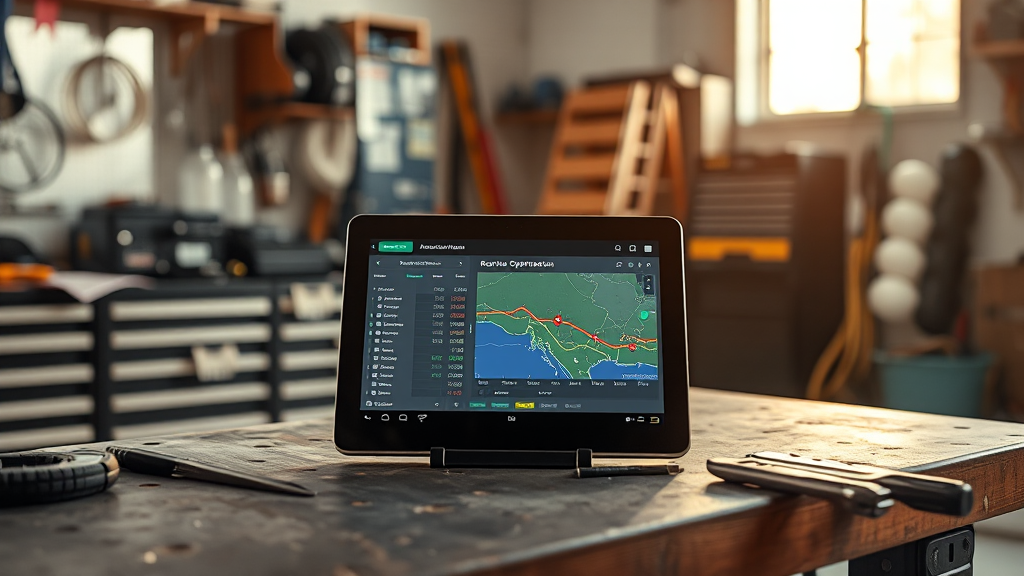
Administrative automation for contractors. For contractors, AI’s most measurable impact is on the unpaid administrative work that consumes a meaningful share of the week — scheduling, invoicing, reminders, route optimization, and payment collection. Field service management software with AI capabilities automates those repetitive tasks, recovering hours that translate directly to billable work. For a deeper breakdown of where the time goes, see our AI home maintenance guide.
Where AI Creates Real Value vs Marketing Claims
| AI Application | Real Value | Marketing Overstatement |
|---|---|---|
| Contractor matching | Reduces booking time from days to minutes | “AI finds the perfect contractor” — matching is proximity + category, not quality prediction |
| Price estimation | Data-informed ranges for budgeting | “AI guarantees fair pricing” — estimates cannot account for hidden on-site conditions |
| Scheduling automation | Eliminates manual calendar management | “AI optimizes your entire business” — still requires human judgment for complex scheduling |
| Customer communication | Automates reminders and follow-ups | “AI handles all customer interactions” — complex issues still require human conversation |
The FTC advises consumers to evaluate AI marketing claims critically — particularly claims about guaranteed results, automated quality assurance, or AI-verified contractor credentials. No AI system can verify that a contractor will perform quality work on your specific project. AI can verify identity documents (as AllBetter does through Stripe Identity), analyze review patterns, and flag inconsistencies — but the final assessment of workmanship requires human judgment. For a closer look at how AI is changing the bid-evaluation side, see AI contractor bidding tools.
AI Will Not Replace Skilled Tradespeople
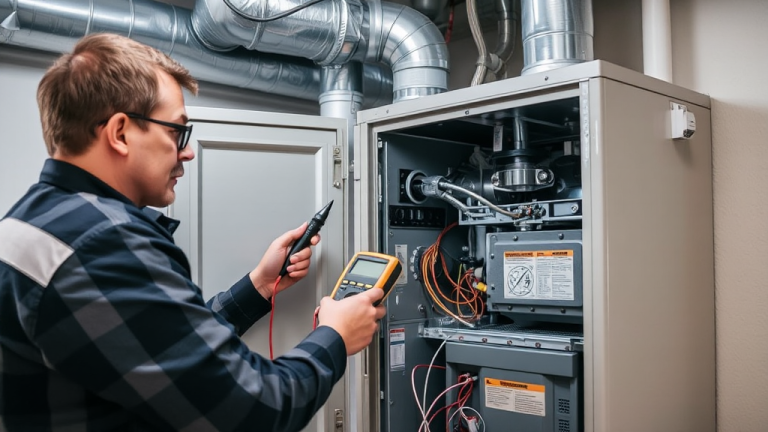
The most common fear among contractors — that AI will replace their expertise — misunderstands what AI is capable of in physical service industries. A plumber’s ability to diagnose a hidden leak by listening to pipe acoustics, an electrician’s judgment about code compliance in a 1920s home, a contractor’s experience reading structural conditions that do not appear in photographs — these skills involve sensory perception, spatial reasoning, and decades of accumulated experience that no current AI system can replicate.
What AI replaces is unpaid administrative time — the scheduling, invoicing, payment follow-ups, and customer communication that pay nothing. AI-powered field service management does not make contractors obsolete. It makes them more profitable by eliminating the work that earns nothing. Every hour recovered from administration is an hour that can be billed to a customer.
How AI Benefits Homeowners
For homeowners, AI’s value is primarily in speed, transparency, and protection. Faster matching means a plumbing emergency gets addressed in hours rather than days. Transparent pricing data means quotes can be evaluated against market norms rather than accepted blindly. And platforms that combine AI-powered matching with structural protections — like escrow-protected payment — create a transaction framework where both parties have clear incentives to follow through.
AllBetter combines AI-assisted matching with Stripe-powered escrow: homeowner funds are committed when a bid is accepted and released when the homeowner approves the completed work. The contractor knows payment is secured before starting; the homeowner knows their money is protected until they confirm satisfaction. The limitation is that no matching algorithm can predict workmanship quality with certainty. Reviews reflect past performance, not future guarantees — verifying licensing, insurance, and references on your own remains essential regardless of how sophisticated the platform becomes.
Skip the lead-gen markup. Get ID-verified bids in minutes.
Post your project on AllBetter — Stripe Identity-verified pros, only pay when you win, Escrow Shield on every transaction.
Booking Speed and Verification: What the Numbers Show
The clearest measurable gains from this technology show up before any work begins — in how fast homeowners get a response and how much is known about the pro who responds.
Speed now decides who gets hired. BrightLocal reports that 62% of consumers move on to the next provider if they cannot book or get a response within 30 minutes, and 87% research service providers online before booking. Automated matching exists precisely to beat that 30-minute window: post a project once, and available pros in the category and area are notified immediately.
Video estimates cut wasted trips. Video calls let contractors visually assess certain problems before dispatching, reducing non-billable site visits by roughly 20% to 35%. The approach works best for jobs that can be scoped by camera — a faucet replacement, an outlet repair, or a gutter cleaning can be priced from a description and photos, while hidden plumbing or older wiring still needs an on-site look.
Verification standards also vary widely by platform, and the differences matter more than the AI branding:
| Platform | Verification approach |
|---|---|
| AllBetter | Stripe Identity verification with government-issued ID for every professional |
| Thumbtack / TaskRabbit | Largely self-reported credentials |
Identity verification confirms who is showing up at your door; it does not predict workmanship. Pair a verified profile with escrow-protected payment and the transaction risk drops on both sides — but the independent reference check still belongs to you.
The Ride-Sharing Parallel — And Where It Breaks Down
The comparison between AI in home services and ride-sharing apps is useful but limited. Uber solved a logistics problem — matching a driver with a rider — where the service (transportation) is standardized. Home services involve variable scope, uncertain conditions, and specialized skills that differ between a faucet replacement and a full bathroom renovation.
AI-powered home service platforms work best for projects that resemble ride-sharing in their predictability: defined scope, clear pricing, and straightforward execution. For complex projects requiring multiple trades, extended timelines, and ongoing scope negotiation, AI assists the administrative workflow but cannot automate the project management itself. For a head-to-head look at how the major platforms stack up, see AllBetter vs HomeAdvisor vs Thumbtack vs Angi.
The AI handles matching — you pick the bid
Post the job once and identity-verified pros send real bids — compare prices side by side, and your payment sits in escrow until you approve the finished work.

Frequently Asked Questions
Will AI replace skilled tradespeople in home services?
No. AI cannot diagnose hidden leaks by feel, assess structural conditions in person, or make the on-site judgment calls that complex repairs require. AI replaces unpaid administrative work — scheduling, invoicing, and payment processing — not the physical skilled labor that home service professionals perform.
Does AI set the final price for home service projects?
No. AI provides data-informed estimate ranges based on historical project data, regional rates, and scope complexity. These estimates are starting points for budgeting and bid evaluation, not binding prices. Final pricing is always determined by the contractor’s assessment of the specific project conditions.
Is AI making home services more expensive?
AI itself reduces costs by automating administrative overhead. However, some platforms use AI marketing claims to justify higher fees. Evaluate the platform’s actual pricing model — lead fees, subscription costs, and transaction charges — rather than its AI marketing language. Platforms with a pay-when-you-win bidding model, like AllBetter, pass efficiency savings directly to homeowners through lower contractor bids.
How does AI improve contractor matching?
AI analyzes project requirements, contractor specialization, geographic proximity, availability, and review history to suggest matches in minutes rather than the days required by phone-based searching. The matching quality depends on the platform’s contractor network size and the specificity of the project description.
Can AI guarantee the quality of a contractor’s work?
No. AI can verify identity documents, analyze review patterns, and flag inconsistencies, but it cannot predict future workmanship on a specific project. The FTC recommends independently verifying contractor licensing, insurance, and references regardless of platform ratings or AI-powered recommendations.
What is the best AI-powered platform for finding home service contractors?
For skilled-trades projects requiring payment protection and verified contractors, AllBetter combines AI-assisted matching with Stripe-powered escrow and government-ID verification. Angi and HomeAdvisor offer the largest contractor networks but charge lead fees that contractors pass back to homeowners. Thumbtack works for simple hourly tasks with straightforward pricing. For a full comparison, see AllBetter vs HomeAdvisor vs Thumbtack vs Angi.
How much time can AI save contractors on administrative tasks?
Independent contractors spend a meaningful share of their week on non-billable administrative tasks — scheduling, invoicing, payment follow-up, and customer communication. AI-powered field service management can recover several hours per week from that overhead, which translates directly to additional billable capacity at typical trade billing rates.