
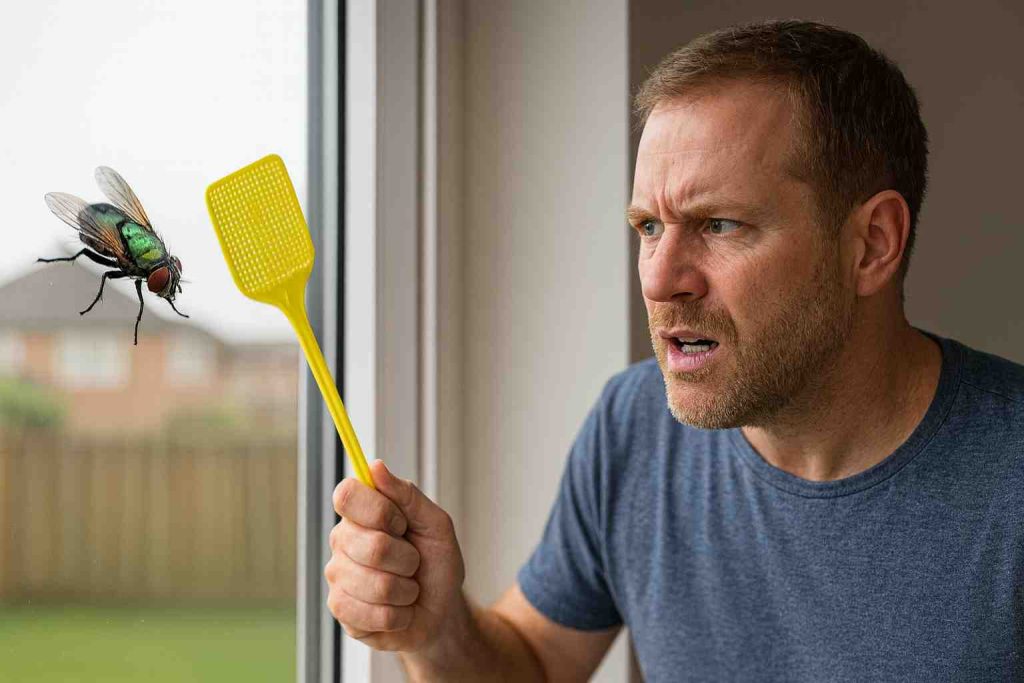
The short version: Houseflies in your home almost never come from outside through an open door — they breed indoors in something organic and damp. Find the source (rotting food, drain biofilm, garbage residue, pet waste, a dead mouse in a wall cavity) and the fly problem ends in 48 hours. The 5 DIY methods below kill adult flies; the real fix is sealing entry points and eliminating breeding sites. A verified handyman on AllBetter handles screen repair, weatherstripping, and gap sealing for $80–$200 with competing bids upfront.
On AllBetter
Need a handyman?
Post the job free and compare bids from identity-verified local pros — payment held in escrow until the work is done right.
Find a handyman near you →A handful of houseflies is annoying. A dozen-plus is a signal — flies don’t gather in your kitchen by accident. They’ve found a breeding site or a constant food source, and bug spray is treating symptoms while the real problem grows. This guide walks through the 2026 diagnostic ladder: where flies actually come from, the 5 DIY removal methods that work, and when sealing entry points (a $80–$200 handyman job) beats reactive killing for the long term.
Fastest way to get rid of houseflies (in order): (1) Take out trash and rinse the bin. (2) Clean garbage disposal and shower/sink drains with vinegar + boiling water. (3) Check for forgotten food, fruit on counters, or pet bowls left out. (4) Trap remaining adults with apple cider vinegar in a covered jar with a pinhole-punctured plastic wrap top. (5) Seal entry points: torn window screens, weatherstripping gaps, and dryer vents missing covers. Population drops 80% within 48 hours when the breeding site is gone.
Why You Have Houseflies in the First Place
Skipping the DIY route? You can post the job on AllBetter and have ID-verified pros bidding in about 10 minutes — no spam calls, payment held in escrow until you approve the work.
Per the CDC’s fly disease page, houseflies (Musca domestica) breed in moist organic matter and complete an egg-to-adult lifecycle in 7–10 days at room temperature. One pair lays up to 500 eggs. Which means: if you’ve seen flies for more than a week, you’re not seeing visitors — you’re seeing the second generation born inside your home.
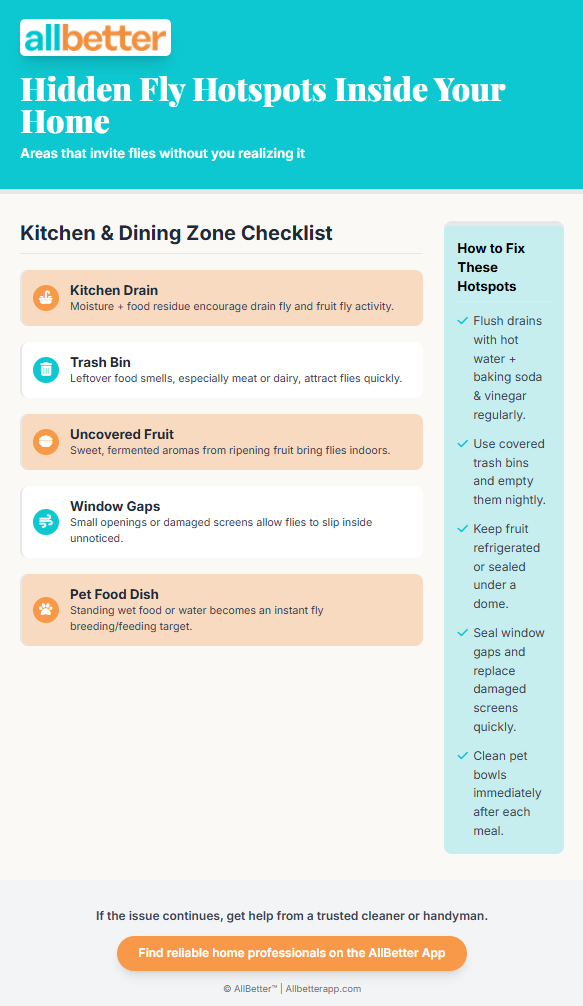
The 7 most common indoor breeding sites:
- Garbage cans without lids or with food residue at the bottom
- Garbage disposal biofilm — flies lay eggs in the slimy organic layer coating the disposal walls
- Drain biofilm (kitchen, bathroom, basement floor drains)
- Forgotten produce (especially bananas, tomatoes, onions hidden behind other items)
- Pet food bowls left out overnight; pet waste in indoor litter boxes or accidents not fully cleaned
- Dead animals in wall cavities or attics — a single dead mouse can support hundreds of flies for 2 weeks
- Recyclables with food residue — rinsed cans/bottles fine, unrinsed ones become breeding sites
Spend 15 minutes systematically checking every one of these. The source is almost always obvious once you look.
5 DIY Methods That Actually Work on Houseflies
Method 1: The Apple Cider Vinegar Jar Trap (Cheapest + Most Effective)
Cost: under $1. Fill a small jar 1/3 full with apple cider vinegar plus a drop of dish soap (breaks the surface tension so flies sink). Cover with plastic wrap. Punch 4–6 pinholes in the wrap with a toothpick. Flies enter, can’t escape, drown.
Place 2–3 jars near observed fly activity (kitchen counter, near trash, by the disposal). Empty every 2 days. Effective against adult flies but doesn’t address the breeding source — pair with Method 3.
Method 2: Drain Treatment (Eliminates the Breeding Source)
If flies cluster around sinks or the garbage disposal, biofilm is the breeding source. The fix is the same as for smelly drains — baking soda, vinegar, boiling water:
- Pour 1 cup baking soda down each affected drain
- Follow with 1 cup distilled white vinegar — let foam for 15 minutes
- Boil a full kettle. Pour slowly down the drain
- Run hot tap water 60 seconds
- For garbage disposal, also grind a handful of ice cubes + a tablespoon of dish soap with cold water running
Repeat weekly until fly activity stops. For an unrelated drain smell + clog combo, our shower drain smell guide and drain cleaning cost guide have the full diagnostic ladder.
Method 3: Garbage and Compost Audit
The single biggest source of household flies is trash with food residue. Three changes that eliminate 80% of fly populations within 48 hours:
- Take out the trash daily during fly season (May–October in most U.S. climates) even if the bag isn’t full. Wet food waste = breeding site within 24 hours.
- Rinse the bin itself weekly. The residue at the bottom of the bin matters more than what’s currently in the bag. Bleach solution (1 cup bleach per gallon water) kills any fly eggs that have been laid.
- Move compost outside, far from doors. Indoor compost bins are houseflies’ favorite breeding habitat. If you compost indoors, freeze food scraps until the weekly outdoor compost run.
Method 4: Essential Oil + Sticky Trap Combo
Flies are repelled by eucalyptus, peppermint, lavender, and clove oils. Mix 10–15 drops total of any of these with 1 cup of water in a spray bottle. Spray near windows, doorways, and trash areas every 2–3 days. Not as effective as the vinegar trap but useful as a perimeter deterrent.
Combine with cheap sticky fly strips ($3 for a 4-pack at any hardware store) hung above garbage areas. Sticky strips look unappealing but catch 5–10 flies per day during peak season — reducing the breeding population materially.
Method 5: The Dead-Animal Sweep (For Mystery Infestations)
If you’ve cleaned every drain, taken out every bag of trash, audited all produce, and you still have a constant fly population — check for a dead animal. A mouse that died in a wall cavity, an attic squirrel, or a bird trapped behind insulation will sustain a fly population for 2–3 weeks.
The smell is the giveaway, but it can be subtle if the carcass is small or behind heavy insulation. Look for: clusters of flies on a specific wall or ceiling section, a faint sweet decomposition smell, more flies in one room than others. The fix is locating and removing the carcass, then sealing the entry point that let it in. A handyman through AllBetter handles both the access (cutting a small drywall access panel if needed) and the sealing for $120–$280 depending on access difficulty.
The Real Long-Term Fix: Sealing Entry Points
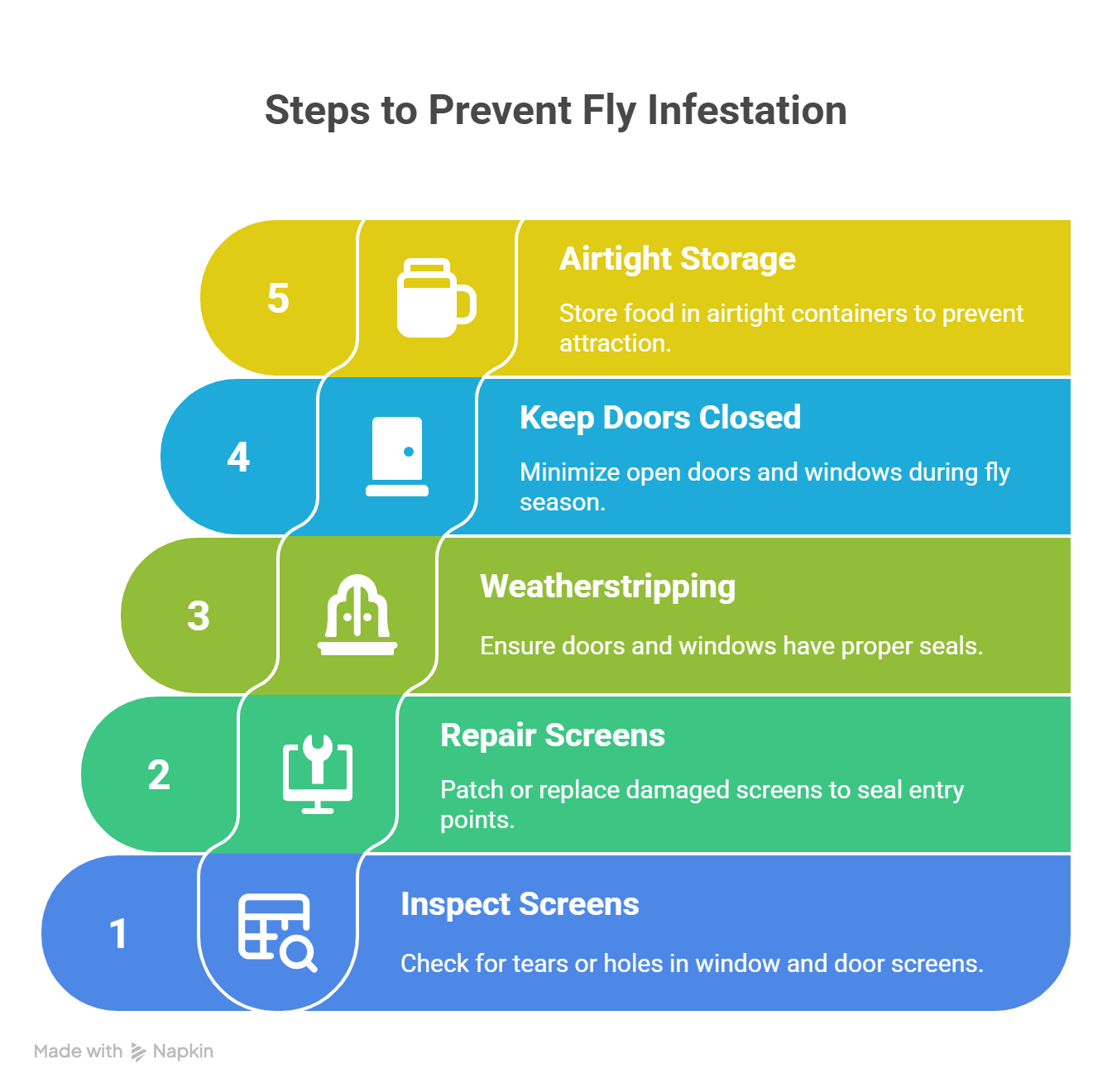
DIY methods kill adult flies and reduce breeding. But if entry points keep letting new flies in, you’ll be doing this work every summer. The 6 most common house-fly entry points and what they cost to fix:
| Entry point | Why flies love it | Fix cost (handyman) |
|---|---|---|
| Torn or missing window screens | Direct outdoor-to-kitchen access | $25–$80 per screen |
| Door weatherstripping gaps | 1/8-inch gap is plenty for fly entry | $50–$120 per door |
| Dryer vent missing or broken louver | Open path indoors + warmth attracts flies | $60–$140 |
| Attic soffit vents without screens | Houseflies and pollinators both enter freely | $80–$200 |
| Plumbing penetrations under sinks (gaps around pipes through walls) | Drain flies + houseflies use these constantly | $40–$80 (caulk + foam) |
| Crawl space or basement door not sealed | Path from outdoors to kitchen via HVAC return | $80–$220 |
For most homes, a 2-hour handyman visit at $80–$200/hr can seal every common entry point in one trip. That’s the closest thing to a “permanent” fly fix — combined with the breeding-source elimination from Methods 1–5 above, fly populations stay near zero year-round.
For broader handyman pricing context: handyman cost per hour, flat-rate vs. hourly handyman.
What Doesn’t Work (Or Makes It Worse)
On AllBetter
Ready to get it done?
Fund escrow before work starts. Release payment when you approve the finished work.
Find a handyman near you →- Bug spray on adult flies in the air. Kills the fly you spray; doesn’t address breeding. Toxic chemical residue in food-prep areas is also a health risk.
- Electric bug zappers. Studies including EPA pesticide research show zappers attract more flies in than they kill — net population increase indoors.
- Foggers and total-release insecticides. Coats every food-prep surface in pesticide. Doesn’t reach breeding sites. Requires hours of post-application cleaning. Don’t use indoors for houseflies.
- “Natural” fly papers with sugar bait. Work fine, but the sugar smell often attracts more flies from outside before catching the ones already indoors. Use sticky strips without sugar bait instead.
When to Stop DIY and Call Pest Control
Watch: what fair pest-control pricing looks like (45 seconds).
Three signals that the problem is bigger than DIY can solve:
- You’ve eliminated all visible breeding sources and flies persist for 2+ weeks. Hidden infestation (dead animal in wall, sewer line break, or rodent activity producing constant fresh sources).
- Cluster flies, blow flies, or flesh flies instead of houseflies. These are different species with different sources — usually decomposition. Identification matters; if the flies look bigger, hairier, or metallic, they’re not regular houseflies.
- Multiple homes on your street have the same problem. Outdoor breeding source nearby (manure pile, broken sewer line, livestock operation) — municipal issue, not a DIY one.
For homeowners: AllBetter doesn’t operate a consumer pest-control marketplace, but verified handymen through AllBetter do handle the prevention side — entry-point sealing, screen repair, sub-floor inspection, and removing dead animals. Find one with competing bids and money in escrow at handyman services near me.
For pest-control business operators reading this: AllBetter JobPro gives your crew the same marketplace plumbers and electricians use — competing bids and money in escrow until the customer taps Approve — and AllBetter Field runs the back office, with payments straight to your own Stripe account. Visit our pest-control software page for the operator pitch.
Why AllBetter Beats the Alternatives
| Feature | Valued at |
|---|---|
| Stripe Identity-Verified Handymen | Peace of Mind |
| Escrow Until You Tap Approve | Financial Security |
| Competing Bids — No Mid-Job Surprises | No Haggling |
| Only Pay When You Win, No Auto-Renew Traps | Real Cost Transparency |
| Stripe ID-Verification + Escrow | Verified Trust |
Total Value: The Safest Way to Find a Handyman in 2026.
Frequently Asked Questions
What’s the fastest way to get rid of houseflies?
Find and eliminate the breeding source. Houseflies don’t sustain populations on the food you eat — they breed in something rotting or biofilm-coated. Check trash for residue, drains for biofilm, forgotten produce, pet bowls, and pet waste. With the source gone, the existing fly population dies off within 5–7 days. Trap remaining adults with apple cider vinegar + dish soap in a covered jar with pinhole-punctured plastic wrap.
Where do houseflies come from inside the house?
Almost always from indoor breeding sites, not outdoor visitors. The seven most common: trash with food residue, garbage disposal biofilm, drain biofilm, forgotten produce, pet bowls left out, dead animal in a wall or attic cavity, and recyclables with food residue. One pair of flies lays up to 500 eggs that hatch in 7–10 days — so a week-long fly problem is a second-generation problem from an unidentified indoor source.
Does apple cider vinegar really work to kill houseflies?
Yes, as a trap for adult flies. Fill a small jar 1/3 with apple cider vinegar plus a drop of dish soap. Cover with plastic wrap, punch 4–6 pinholes. Flies enter, can’t escape, drown. The dish soap breaks the surface tension so they sink instead of floating on top. Empty every 2 days. Effective for adults but doesn’t address breeding — combine with cleaning the source.
How much does it cost to seal entry points against flies?
$80–$280 for a typical handyman visit covering window screen repair, door weatherstripping, dryer vent louver replacement, and gap sealing around plumbing penetrations. That’s the long-term fix — combined with eliminating breeding sources, fly populations stay near zero year-round. Verified handymen on AllBetter provide competing bids upfront with money held in escrow until the work is approved.
Will bug spray or zappers solve a housefly problem?
No. Bug spray kills the fly you hit but does nothing about breeding. Electric zappers attract flies from outside (net negative on indoor population). Foggers coat every surface in pesticide without reaching breeding sites. The actual fix is eliminating the moist organic source where flies lay eggs — trash residue, drain biofilm, dead animals, or forgotten produce. Then trap remaining adults.
When should I call pest control instead of doing it myself?
Three signals: (1) you’ve eliminated all visible breeding sources and flies persist 2+ weeks (likely a dead animal in a wall cavity); (2) the flies aren’t houseflies — cluster flies, blow flies, or flesh flies indicate different sources usually involving decomposition; (3) multiple houses on your street have the problem (outdoor or municipal source). AllBetter doesn’t run a consumer pest-control marketplace, but handymen handle the prevention side (entry-point sealing, dead-animal removal).
Why are there suddenly so many flies in my house?
A sudden swarm means eggs hatched near a breeding source inside — houseflies go from egg to adult in about a week, so “none yesterday, dozens today” is normal for an indoor source. Work the source checklist above in order: garbage and compost audit first, then a drain treatment, and if the swarm is concentrated in one room with no visible source, run the dead-animal sweep. Killing the visible flies without finding the source restarts the clock, not the problem.
Are these houseflies or fruit flies?
Size and location tell you in seconds: fruit flies are tiny (about 1/8 inch), tan-to-brown, and hover over produce, drains, and recycling; houseflies are two to three times bigger, gray, and roam the whole room. The apple cider vinegar jar trap above catches both, but the fix differs — fruit flies end when the ripe fruit and drain film go, houseflies end when the breeding source from the checklist above goes.
What is the best home remedy for house flies?
The apple cider vinegar jar trap — Method 1 above — is the cheapest and most effective home remedy: a jar, vinegar, a drop of dish soap, and a punctured lid. Pair it with the garbage audit so new flies stop arriving while the trap works on the ones already inside.
Hire an ID-verified home services pro — without the lead-gen markup
| Feature | Angi / Thumbtack / HomeAdvisor | AllBetter |
|---|---|---|
| Pro Identity Verified | Self-attested, no verification | Stripe Identity verification on every pro |
| Lead Fees to Pros | $15–$80 per lead (passed back to homeowner) | only pay when you win — ever |
| Payment Protection | None — you pay direct, hope for the best | Escrow Shield — you only release payment when work is approved |
| Pro Quality Filter | Anyone can sign up; reviews come later | ID-verified pros, average 3+ bids per job |
| Spam & Auto-Calls | Your phone rings for days after one inquiry | Zero spam — pros message in-platform |
Lead-fee context: home services leads on traditional platforms run $20-$80 each — that markup gets baked into your quote.
DIY-ing home services work without an ID-verified pro can turn a $200 fix into a $2,000 do-over — and the quality issues only show up months later. The safer move is to post the job on AllBetter — you get ID-verified bids in minutes, no obligation.
Your money sits in escrow and is released only when you approve the work.
Sources
- CDC — Houseflies and Disease, lifecycle and indoor breeding information.
- EPA Pesticide Registration program, guidance on indoor pesticide use and zapper research.
How do you get rid of houseflies?
Start with the two moves that break the breeding cycle: set an apple cider vinegar jar trap where the flies gather, and treat your drains — that is where houseflies lay eggs. If you want to get rid of houseflies naturally, the vinegar trap, the drain flush, and the garbage-and-compost audit from the methods above handle most infestations without a single chemical spray. Flies back within a week? The breeding source is still open — recheck drains, trash seals, and entry points, or bring in pest control for a recurring infestation.
More AllBetter resources: