
On AllBetter
Need an HVAC pro?
Post the job free and compare bids from identity-verified local pros — payment held in escrow until the work is done right.
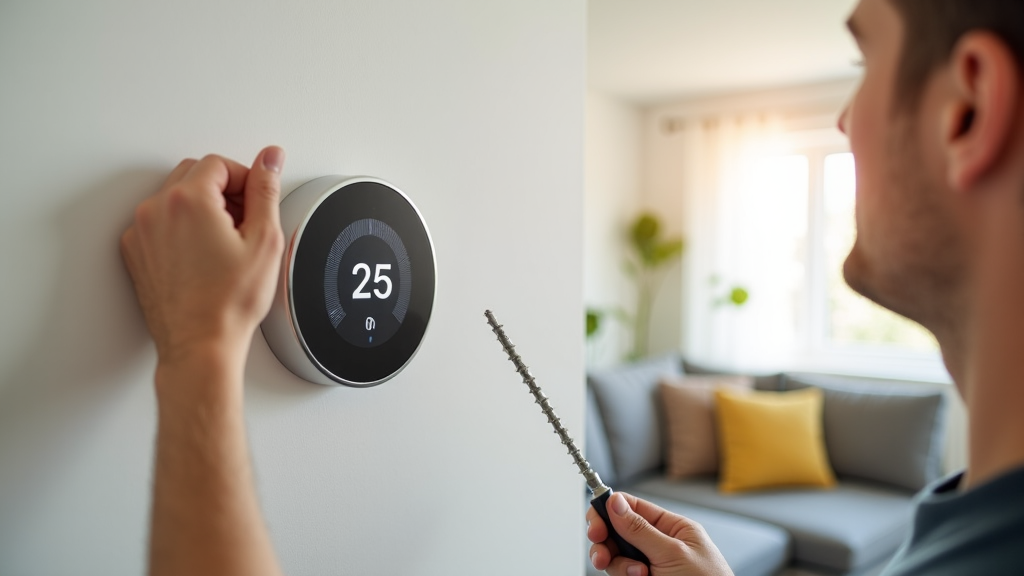
Find an HVAC pro near you →Last February, a homeowner in suburban Denver was staring at a $387 gas bill — the third month in a row over $300. Her 15-year-old mercury thermostat had two settings: on and off. She was heating an empty house eight hours a day while at work and blasting the furnace at night in rooms nobody slept in. A friend recommended a smart thermostat. She booked an HVAC tech through AllBetter, who installed an Ecobee Premium with two room sensors for $310 total — $250 for the thermostat plus $60 for the install. Within three months, her heating bill dropped to $198. Over the full year, she saved $512. The thermostat paid for itself before summer.
A smart thermostat is also one of the first upgrades we recommend for older adults living alone — see the full list of aging-in-place tech that preserves independence.
Smart thermostat installation cost ranges from $130 to $400 for most homes in 2026, including the device and professional labor. That number shifts based on the thermostat brand, whether your system has a C-wire, the complexity of your HVAC setup, and whether you tackle the install yourself or book a pro. This guide covers every factor so you can budget accurately and avoid overpaying.
$250 (avg installed)
$1,200+ (multi-zone)
How much does smart thermostat installation cost? Smart thermostat installation costs $130 to $400 in 2026 for a single-zone system, including the thermostat and professional labor. A basic Wi-Fi thermostat with a simple swap runs $130–$200 total. A premium smart learning thermostat like the Nest or Ecobee with professional installation averages $250–$400. If new wiring or a C-wire adapter is needed, add $30–$150. Multi-zone systems with multiple thermostats run $400–$1,200.
A Real Homeowner’s $250 Install That Saves $500 a Year
Skipping the DIY route? You can post the job on AllBetter and have ID-verified pros bidding in about 10 minutes — no spam calls, payment held in escrow until you approve the work.
Related read: The hidden spring plumbing problem that costs homeowners $8,000+
Related read: Every 2026 tax credit and rebate for green home and HVAC upgrades
A family of four in Columbus, Ohio, was spending $2,800 a year on heating and cooling. Both parents worked full-time, the kids were in school until 3:30 PM, and nobody was home from 7:30 AM to 3:30 PM on weekdays — yet the furnace and AC ran at full comfort settings all day. Their old programmable thermostat had a schedule feature, but it was so confusing that they’d never programmed it.
They purchased a Google Nest Learning Thermostat ($220) and booked a pro install through AllBetter for $75. Total cost: $295. The Nest learned their schedule within a week and started auto-adjusting. It turned the heat down at 7:45 AM when everyone left, pre-heated the house at 3:00 PM before the kids got home, and dropped to 65°F at 11 PM when everyone was asleep.
First-year result: $2,240 in heating/cooling costs — a $560 savings. The thermostat paid for itself in 6.3 months. Their utility company also gave them a $75 rebate, dropping the effective cost to $220.
Smart Thermostat Prices by Type
Watch: smart thermostat install pricing, all-in (24 seconds).
The thermostat itself is usually the biggest part of the total cost. Prices range from $25 for a basic programmable unit to $400+ for a premium smart thermostat with room sensors. Here’s how the categories break down in 2026:
Installation Labor Costs
Labor is the second piece of the equation. What you’ll pay depends almost entirely on your existing wiring. The Department of Energy recommends professional installation for any system more complex than a direct swap on matching wires.
The C-Wire Question: Do You Need One?
The “C-wire” (common wire) is the single most common complication in smart thermostat installations. It provides continuous 24V power to your thermostat — older thermostats didn’t need it because they ran on batteries, but smart thermostats with Wi-Fi radios, touchscreens, and sensors need constant power.
How to check: Remove your current thermostat faceplate and count the wires. If you see 5 wires (R, G, Y, W, and C), you’re set. If you only see 4 wires and no C terminal, you’ll need either a C-wire adapter ($30–$50 for the part) or new wiring run to the furnace ($150–$300 for labor).
DIY vs. Professional Installation
Smart thermostat installation is one of the few HVAC tasks where DIY is genuinely viable for many homeowners — but only under the right conditions. Here’s a realistic comparison:
Cost: $0 labor (thermostat only)
Time: 30–90 minutes
Best when: You have a C-wire, a single-stage furnace, and matching wire colors on the old thermostat
Risk: Incorrect wiring can blow your HVAC control board fuse ($150–$400 to replace) or damage the thermostat
Cost: $50–$300 labor
Time: 30 minutes – 4 hours
Best when: No C-wire, heat pump, multi-stage system, multi-zone, or unfamiliar wiring
Related: a heat pump installer near you
Benefit: Tech verifies compatibility, tests all modes (heat, cool, fan, emergency), and ensures HVAC warranty stays intact
Total Installed Cost: Common Scenarios
Here’s what real installations actually cost when you combine the thermostat price with labor:
| Scenario | Thermostat | Labor | Total |
|---|---|---|---|
| DIY basic programmable | $25–$80 | $0 | $25–$80 |
| DIY smart thermostat (C-wire present) | $200–$350 | $0 | $200–$350 |
| Pro install, simple swap | $80–$250 | $50–$150 | $130–$400 |
| Pro install + C-wire adapter | $200–$350 | $80–$200 | $280–$550 |
| Pro install + new wiring | $200–$350 | $150–$300 | $350–$650 |
| Multi-zone system (2–4 thermostats) | $400–$1,200 | $200–$500 | $600–$1,700 |
Popular Smart Thermostats Compared
On AllBetter
Ready to get it done?
Fund escrow before work starts. Release payment when you approve the finished work.
Find an HVAC pro near you →The four major brands dominate the residential smart thermostat market. Each has distinct strengths, price points, and compatibility profiles. Here’s how they stack up for energy-conscious homeowners:
| Feature | Google Nest Learning | Ecobee Premium | Honeywell T9 | Emerson Sensi Touch |
|---|---|---|---|---|
| Price | $220–$280 | $230–$250 | $170–$200 | $130–$170 |
| C-Wire Required? | No (uses battery backup) | No (PEK included) | Yes | No (optional) |
| Learning | Yes — auto-schedule | Yes — eco+ mode | Basic geofencing | No |
| Room Sensors | $40 each (sold separately) | 1 included, $40 each add-on | 1 included, $40 each add-on | Not available |
| Voice Assistant | Google, Alexa | Alexa built-in, Google, Siri | Alexa, Google | Alexa, Google |
| Heat Pump Compatible | Yes | Yes | Yes | Yes |
| Best For | Google Home users, no C-wire | Apple/Siri users, room sensors | Budget-smart with sensors | Simple Wi-Fi on a budget |
HVAC Compatibility Issues That Affect Cost
Your HVAC system type directly impacts which thermostat you can buy and how much installation costs. A mismatch can mean returning the thermostat, paying for a different model, or needing additional wiring work. If you’re upgrading your furnace or HVAC system, installing a smart thermostat at the same time saves on labor.
Multi-Zone Smart Thermostat Systems
If your home has a zoned HVAC system — multiple thermostats controlling different areas through zone dampers — the cost scales up because each zone needs its own thermostat and wiring.
An alternative to multi-zone wiring: use a single smart thermostat with room sensors. Ecobee’s SmartSensor system lets you prioritize comfort in specific rooms without separate thermostats per zone — which works well for homes with a single HVAC system and no existing zone dampers.
Energy Savings and ROI
The real question isn’t what a smart thermostat costs — it’s how fast it pays for itself. The Department of Energy estimates that programmable and smart thermostats can save 10–23% on heating and cooling bills, which account for roughly half of the average American home’s total energy costs.
Here’s how the payback math works for typical installations:
Even in the slowest payback scenario, a smart thermostat pays for itself within 18 months and then generates pure savings for the next decade. Combine it with other strategies to lower your utility bills — proper insulation, clean air ducts, and sealed windows — and the combined savings compound.
Utility Rebates and Tax Incentives
Many utility companies and state programs offer rebates for ENERGY STAR-certified smart thermostats, reducing your effective cost by $50–$100 or more:
- Utility rebates ($50–$100): Over 200 utility companies nationwide offer mail-in or instant rebates for smart thermostat purchases. Check the ENERGY STAR rebate finder or your utility’s website. Some utilities distribute free Nest or Ecobee thermostats to customers enrolled in demand-response programs.
- Demand-response programs ($25–$75/year ongoing): Some utilities pay you an annual credit for allowing them to adjust your thermostat by 1–3 degrees during peak demand events (typically 10–15 times per summer). Nest’s “Rush Hour Rewards” and Ecobee’s “eco+” both integrate with these programs.
- State energy efficiency programs: States like California (via TECH Clean California), Massachusetts (Mass Save), and New York (NYSERDA) offer additional rebates or discounted installations when bundled with other energy upgrades.
- Federal tax credits (Inflation Reduction Act): While the IRA primarily covers heat pumps, insulation, and HVAC equipment, smart thermostats installed alongside qualifying HVAC upgrades may be included as part of the overall project cost. Consult a tax professional for your specific situation.
How to Get the Best Price on Installation
- Check your wiring before shopping. Pop off your old thermostat cover and photograph the wiring. Count the wires and note the terminal labels (R, W, Y, G, C, etc.). This determines whether you need a C-wire adapter or new wiring — the biggest variable in installation cost.
- Run the manufacturer’s compatibility checker. Both Nest and Ecobee have online tools that tell you exactly which models work with your system based on your wiring photo.
- Get 2–3 quotes from HVAC pros. On AllBetter, post your thermostat install job and let verified HVAC techs compete on price. Your payment stays in escrow until the work is done and tested.
- Buy the thermostat yourself. HVAC companies often mark up thermostats 20–40%. Buy directly from Amazon, Home Depot, or the manufacturer and pay the tech labor-only. Most pros are happy to install customer-supplied thermostats.
- Check for utility rebates first. Some utilities offer the thermostat free through their demand-response program. Others offer $50–$100 rebates. Search “[your utility name] smart thermostat rebate” before purchasing.
- Bundle with other HVAC work. If you’re due for a furnace tune-up, duct cleaning, or filter change, schedule the thermostat install at the same time to save on the service call fee.
Hidden Costs to Watch For
Most smart thermostat installations are straightforward, but hidden costs can surface in older homes or complex systems:
- Patching drywall from wire runs ($50–$150): If new thermostat wire needs to be fished through finished walls, patching and painting may be needed. This is rare — most techs fish wire through existing holes or run it through the basement/attic.
- Furnace control board replacement ($150–$400): In some older furnaces, the control board doesn’t output enough power on the C terminal for a smart thermostat. The board may need replacement or a dedicated 24V transformer ($30–$60).
- Zone damper motor replacement ($100–$250 per damper): In multi-zone systems, if zone damper motors are failing, the HVAC tech may discover this during thermostat installation. Bad dampers mean the new thermostat can’t control zones properly.
- Wi-Fi extender ($30–$80): Smart thermostats need a stable Wi-Fi connection. If your thermostat is in a dead zone (common in hallways surrounded by thick walls), you may need a Wi-Fi extender or mesh node nearby.
A thorough home maintenance routine catches many of these issues before they become surprises during installation.
How to Spot an Honest HVAC Tech (vs a Brand-Loyal Pusher)
| 🔴 Red Flag (Franchise / Aggregator pattern) | 🟢 Green Flag (Local Independent / Marketplace) |
|---|---|
| Recommends thermostat without checking C-wire | Inspects HVAC wiring + C-wire status before quote |
| One brand quoted (“we always install Nest”) | Compares Nest, Ecobee, Honeywell by HVAC compatibility |
| Flat install fee regardless of complexity | Install cost varies by setup (single zone vs multi) |
| Doesn’t ask about HVAC age/compatibility | Verifies HVAC system age + smart-thermo compatibility |
| 30-day labor warranty | 1-year labor + manufacturer device warranty |
| Misses Wi-Fi + room sensor setup | Configures Wi-Fi, app, sensors, schedules at install |
Hire an ID-verified home services pro — without the lead-gen markup
| Feature | Angi / Thumbtack / HomeAdvisor | AllBetter |
|---|---|---|
| Pro Identity Verified | Self-attested, no verification | Stripe Identity verification on every pro |
| Lead Fees to Pros | $15–$80 per lead (passed back to homeowner) | only pay when you win — ever |
| Payment Protection | None — you pay direct, hope for the best | Escrow Shield — you only release payment when work is approved |
| Pro Quality Filter | Anyone can sign up; reviews come later | ID-verified pros, average 3+ bids per job |
| Spam & Auto-Calls | Your phone rings for days after one inquiry | Zero spam — pros message in-platform |
Lead-fee context: home services leads on traditional platforms run $20-$80 each — that markup gets baked into your quote.
DIY-ing home services work without an ID-verified pro can turn a $200 fix into a $2,000 do-over — and the quality issues only show up months later. The safer move is to post the job on AllBetter — you get ID-verified bids in minutes, no obligation.
Your money sits in escrow and is released only when you approve the work.
Frequently Asked Questions
How much does smart thermostat installation cost in 2026?
Smart thermostat installation costs $130 to $400 in 2026 for most homes, including the thermostat and professional labor. A basic Wi-Fi thermostat with a simple swap runs $130–$200. A premium smart thermostat like the Nest Learning or Ecobee Premium with professional installation averages $250–$400. If your home lacks a C-wire, add $30–$150 for an adapter or new wiring.
Can I install a smart thermostat myself?
Yes, if your home has a C-wire and a standard single-stage HVAC system. Most smart thermostats include step-by-step guides and apps that walk you through the wiring. The process takes 30–60 minutes. However, if you have a heat pump, multi-stage system, or only 2–4 wires at the thermostat, professional installation is strongly recommended to avoid damaging your HVAC control board.
Do smart thermostats really save money on energy bills?
Yes. The Department of Energy and ENERGY STAR estimate savings of 10–23% on heating and cooling bills, which translates to $100–$500 per year depending on your climate, energy rates, and home size. Homes that previously had unprogrammed or manual thermostats see the highest savings. Most smart thermostats pay for themselves within 6–18 months.
What is a C-wire and do I need one for a smart thermostat?
The C-wire (common wire) provides continuous 24V power to your thermostat. Smart thermostats need constant power for Wi-Fi, touchscreens, and sensors. About 40% of homes lack a C-wire. Solutions include: the Ecobee Power Extender Kit (included free), a third-party C-wire adapter ($30–$50), or running new thermostat wire from the furnace ($150–$300 in labor). The Nest can run without a C-wire using battery backup, though this may cause issues with some systems.
Which smart thermostat is best for a heat pump?
Both the Google Nest Learning Thermostat and Ecobee Premium support heat pumps with auxiliary/emergency heat, including dual-fuel systems. The Ecobee has a slight edge for heat pump owners because it includes the Power Extender Kit for homes without a C-wire and supports more complex wiring configurations out of the box. Always run the manufacturer’s compatibility checker with your specific wiring before purchasing.
Are there rebates available for smart thermostats?
Yes. Over 200 utility companies offer rebates of $50–$100 for ENERGY STAR-certified smart thermostats. Some utilities provide free thermostats through demand-response programs. Additional savings come from demand-response credits ($25–$75/year) for allowing minor temperature adjustments during peak demand. Check the ENERGY STAR rebate finder or search your utility’s website for current offers.
More AllBetter resources: