


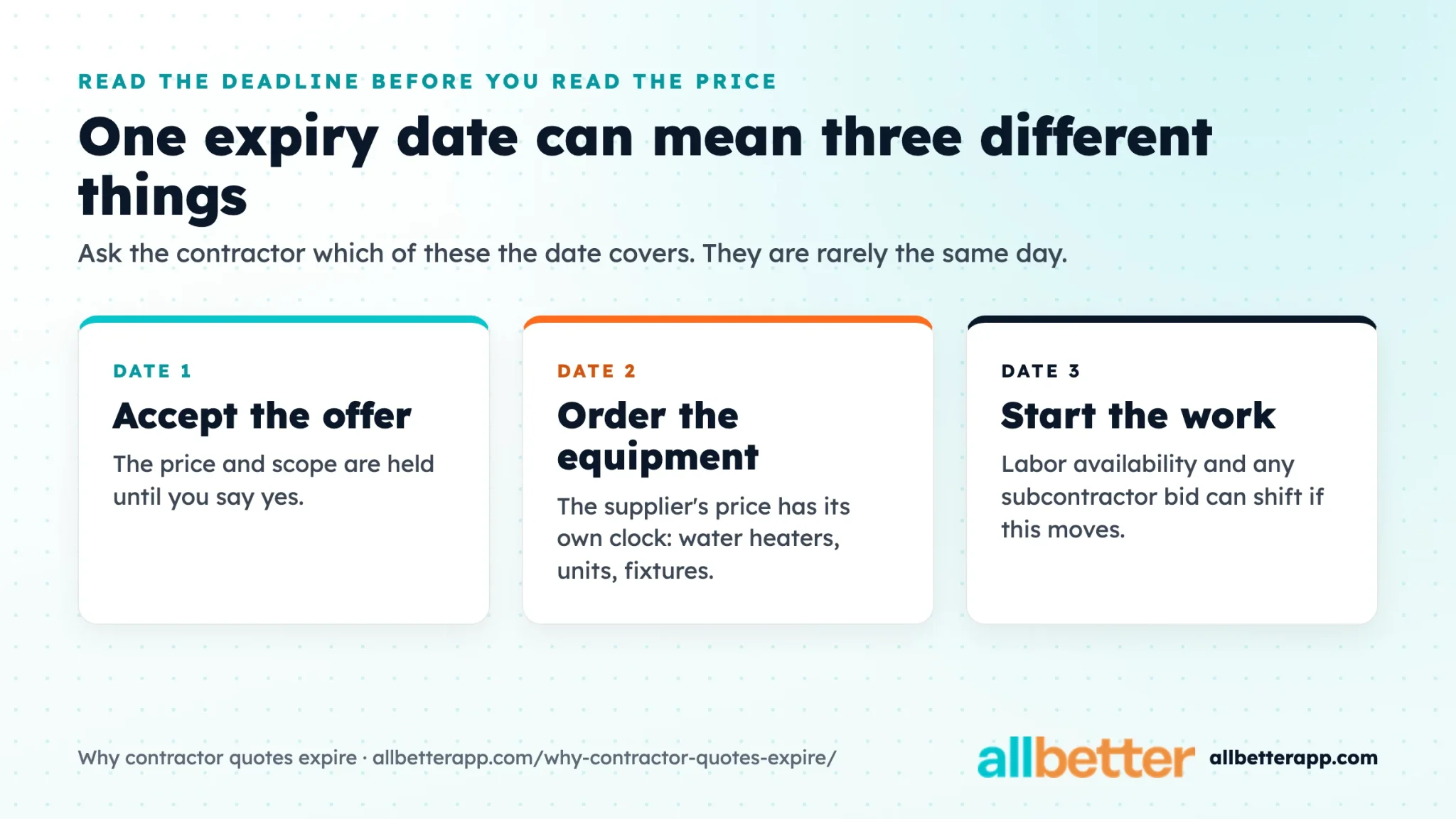
Does it cover accepting the offer, ordering equipment, or starting the work? Those are different dates. Get the answer before deciding whether the quote fits your project.
Inflation adds context, but a national percentage cannot tell you whether an individual repair price is fair. Here is how to read the economic news, compare the actual numbers and ask for an explanation you can use.
This guide expands my original LinkedIn article on quote expiration with a cost breakdown and a checklist you can use while comparing bids.
What CPI and PPI tell homeowners
The September 2026 inflation releases describe two different parts of the economy:
| Measure | Change from August 2026, seasonally adjusted | Change over 12 months, unadjusted | Release date |
|---|---|---|---|
| Consumer Price Index, all items | +0.6% | +3.7% | October 14, 2026 |
| Producer Price Index, final demand | +1.3% | +6.3% | October 15, 2026 |
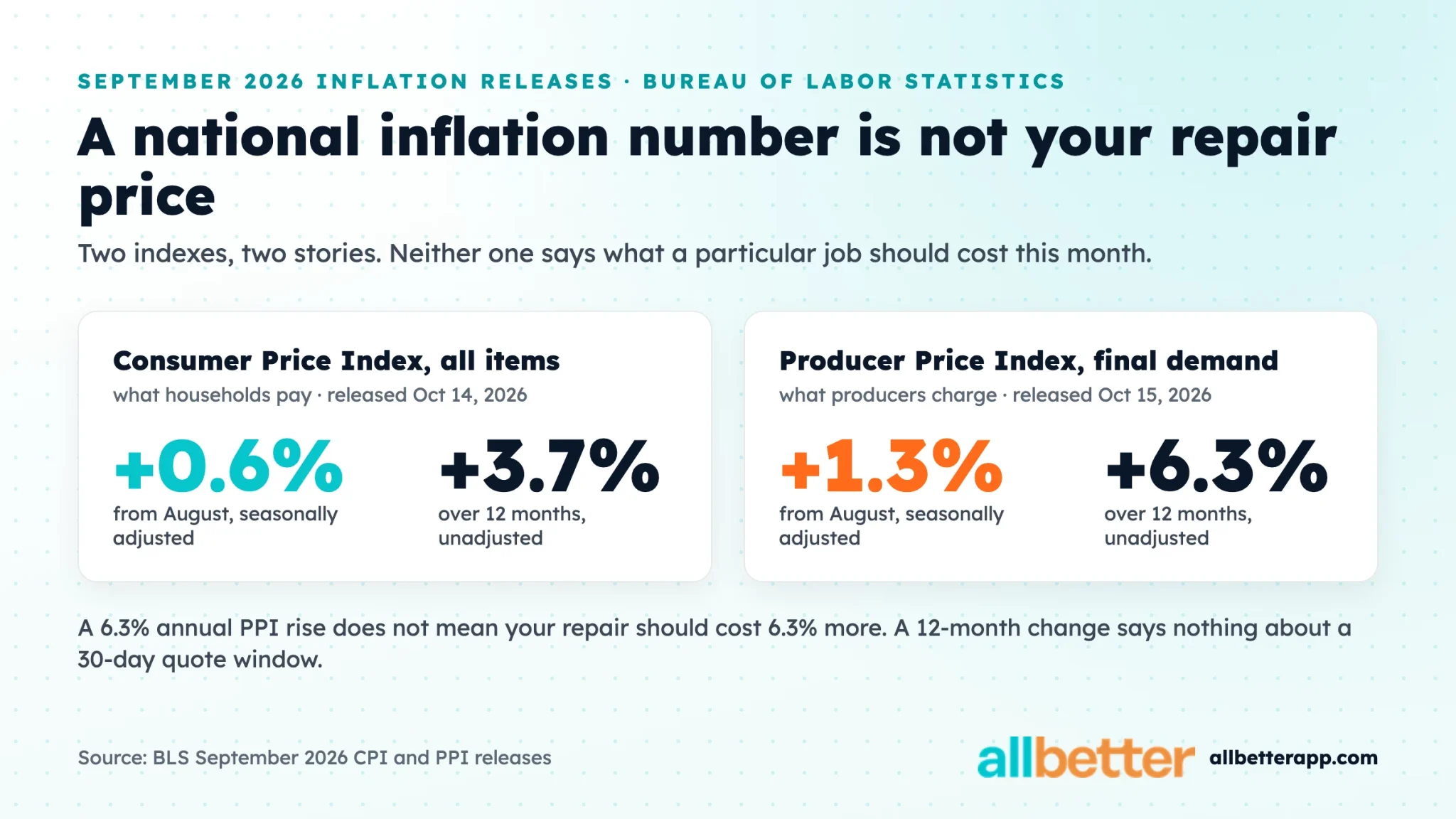
Sources: BLS September CPI release and BLS PPI release, checked October 15, 2026.
CPI tracks prices consumers pay for a broad basket of goods and services. PPI tracks selling prices domestic producers receive. The BLS explanation of PPI describes that distinction.
Neither headline measures your contractor’s complete expense bill. PPI is not the contractor’s payroll index, and the final-demand headline is not an inflation rate for plumbing, roofing or HVAC jobs. A 6.3% annual PPI increase does not establish that your repair should cost 6.3% more.
The time periods differ too. A 12-month change does not describe the change during a shorter quote window. A monthly reading is also an aggregate observation, not a measurement of your job between its issue date and deadline.
Use these numbers to ask better questions. Ask the contractor which item changed, which price or written term supports the change, and how that affects the total.
Where price changes can enter a home-service quote
On AllBetter
Ready to get it done?
Fund escrow before work starts. Release payment when you approve the finished work.
Find a verified pro near you →Imagine a contractor preparing a replacement water-heater offer. The unit has a supplier price, delivery has a cost, and the installation has labor and other project expenses. If the supplier’s offer expires before the equipment is ordered, the contractor may need a new purchase price.
An offer that includes a subcontractor can involve another deadline. For example, a general contractor might include an electrician’s bid in a larger project. Ask whether that subcontractor’s price remains valid through the acceptance and start dates in your offer. A subcontractor’s revised bid should be identified as a specific change, rather than folded into a vague statement about inflation.
These are possible cost channels, not a finding that every contractor is facing the same increases:
- Materials and equipment: named products, quantities, supplier prices and substitutions.
- Delivery and fuel: freight, site access and trips needed for the actual scope.
- Labor: crew requirements and the work involved, assessed separately from headline PPI.
- Subcontracted work: the included bid, its scope, exclusions and validity date.
- Timing and availability: whether the original product and proposed crew dates remain available.
Some written agreements also use a price-adjustment provision. BLS’s guide for contracting parties explains how an index may be used in such provisions. The actual written terms matter; an inflation release alone does not explain a change to work you have already agreed to.
A 10% material increase can mean a 4% project increase
This fictional example illustrates the arithmetic. It is not an AllBetter quote, a local price estimate, or a forecast.
The assumed 10% material increase below is chosen only to demonstrate the calculation. It does not come from either inflation release.
| Component | Original amount | Assumed change | Revised amount |
|---|---|---|---|
| Materials and equipment | $4,000 | +10%, or $400 | $4,400 |
| Labor | $4,000 | Unchanged | $4,000 |
| Other project costs and margin | $2,000 | Unchanged | $2,000 |
| Total | $10,000 | +$400 | $10,400 |
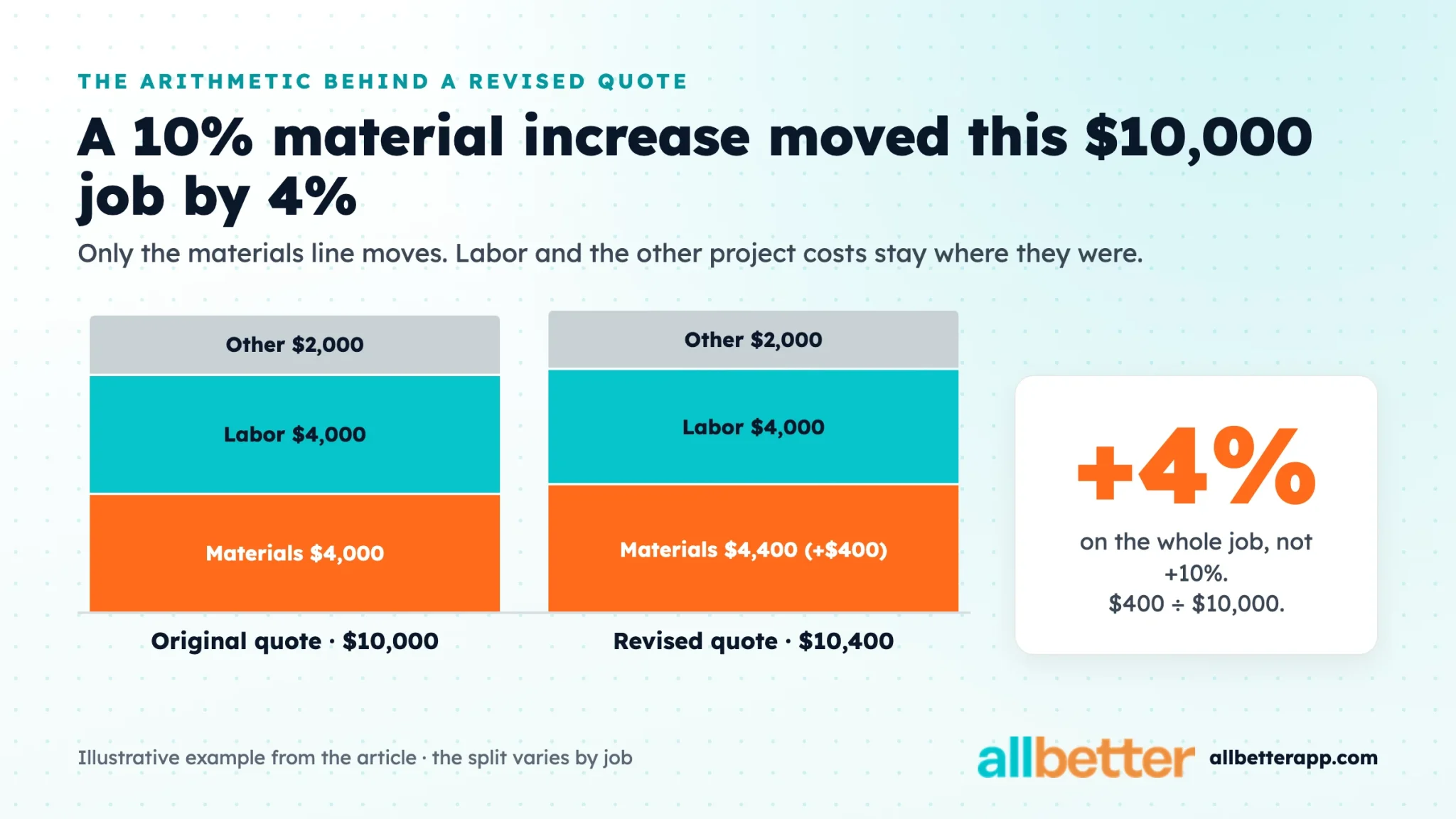
The increase on the whole job is $400 divided by $10,000, or 4%. That result assumes every other component stays unchanged. It does not establish how any real contractor must price a job.
For your own comparison, write down the original total, the affected items and the revised total. Ask about any separate changes to labor, overhead or margin. Do not apply a material percentage to an entire project without understanding what it covers.
Price is only one comparison. Two offers can differ because one includes disposal, repairs to surrounding surfaces, a different equipment model or additional visits. Our guide to why contractor quotes vary explains how to compare those differences.
A checklist to complete before a contractor quote expires
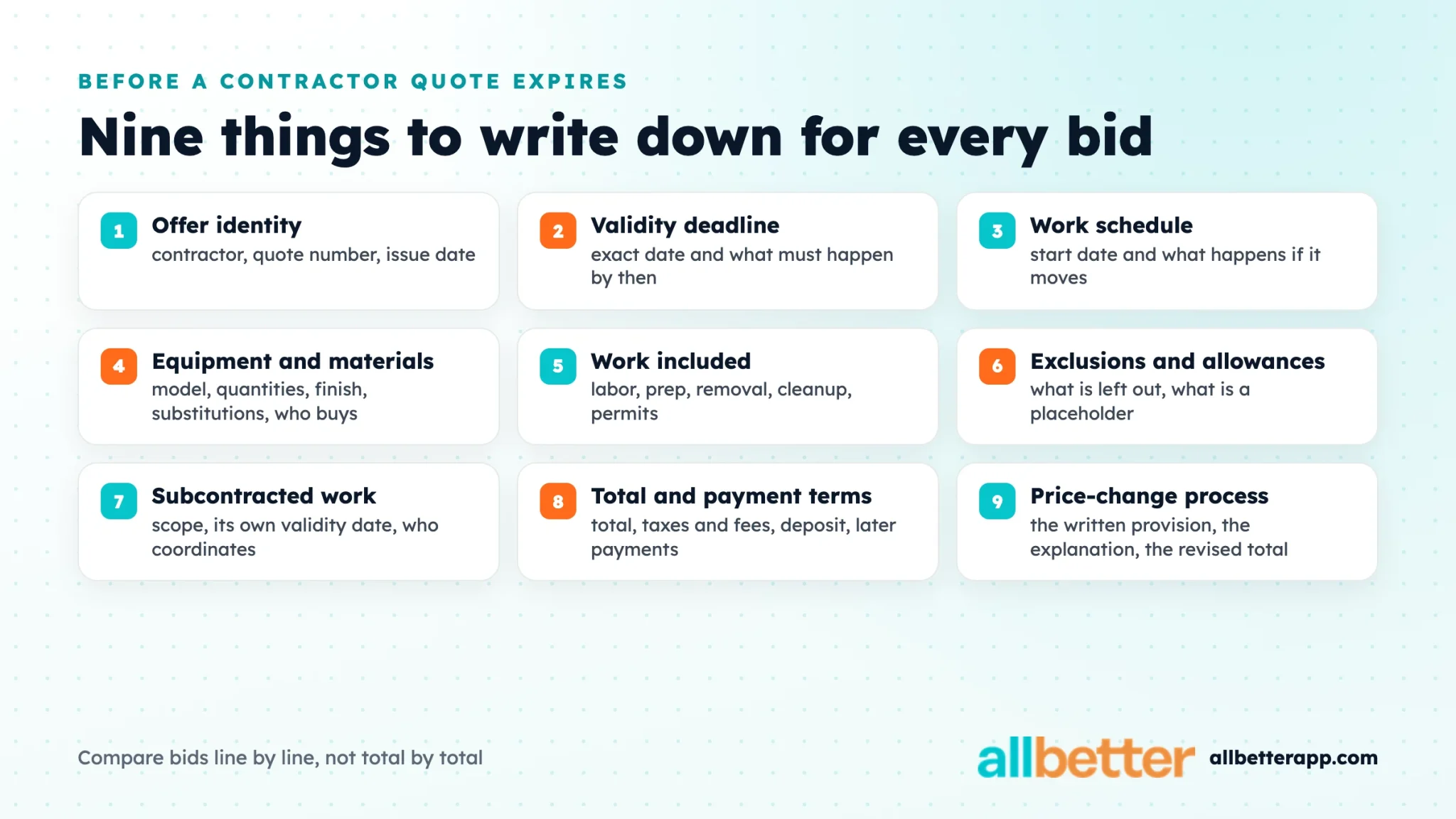
Copy these fields into your notes for each bidder:
| Field | What to record or ask |
|---|---|
| Offer identity | Contractor, quote number and issue date |
| Validity deadline | Exact date and what action must happen by then |
| Work schedule | Proposed start date and what happens if it moves |
| Equipment and materials | Model, quantities, finish, substitutions and who purchases them |
| Work included | Labor, preparation, removal, cleanup and any relevant permit responsibilities |
| Exclusions and allowances | What is left out, and what remains a placeholder |
| Subcontracted work | Included scope, any separate validity date and who coordinates it |
| Total and payment terms | Total, stated taxes/fees, deposit terms and later payments |
| Price-change process | The written provision or scope change, explanation and revised total |
For smaller jobs, compare the complete visit as well as the hourly rate. Minimum charges, materials and a return trip can change the total. See our guide to handyman rates and complete project quotes.
Keep the quote date and conditions with your spending plan. Our home maintenance budget guide explains how to turn a defined project into a budget input. If a revised total exceeds your limit, decide which optional tasks can wait; the small home repair budget guide helps organize that conversation without treating any budget as a guaranteed job price.
A message you can send before the deadline
I’m reviewing quote [number]. Please confirm whether the valid-until date applies to acceptance, ordering materials or starting the job. Which amounts are firm, and which are allowances? If the total changes, please identify the affected items and send the revised scope and total in writing. Please also confirm any included subcontractor deadline and what happens if the proposed start date moves.
This is a request for clarification. It is not an acceptance, a deposit instruction or a substitute for reviewing the actual agreement.
What to do when the date has passed
If you have not accepted the offer, ask whether the contractor will extend it or issue a new version. Compare the new and old documents for more than the total: equipment, quantities, exclusions, allowances and schedule can change too.
If you have already agreed to work and a new amount appears, ask what written term or requested scope change explains it. Keep the original offer, agreement and proposed revision together. Expiration, acceptance and later changes are different questions; a general inflation headline cannot resolve them for you.
Give each bidder the same project description, photos, requirements and timing. If one offer includes items another excludes, ask for a matching scope before choosing on price.
Compare the job you actually need
An expiration date should give you a clear point to discuss the offer. It should not replace an explanation of the work or its price.
With AllBetter’s homeowner marketplace, describe the job, compare bids and choose a pro for your scope.
For a plumbing job, use the local plumbing service page to describe the repair and compare bids. For heating or cooling work, start with HVAC service options and specify the equipment, installation work and removal you need included.
Posting and comparing bids is free — a small service fee applies when you book, covering escrow payment protection.
Common questions about quote expiration
How long should a contractor quote remain valid?
Read the period stated in the offer and ask what it covers. This guide does not establish a universal 30-, 60- or 90-day rule. Supplier and subcontractor deadlines can be separate from the proposed work date.
Does higher inflation prove that a revised quote is fair?
No. National CPI and PPI figures do not document a particular job’s costs. Ask which items changed, what is included and how the revised total was calculated. Compare the same scope with other bids.
Does an expired quote mean I must pay a higher amount?
Ask for the current written offer and compare it with the original. The answer depends on what was offered, what you have agreed to and the applicable terms. Do not assume that a deadline or inflation report automatically settles a disagreement.
What if the cheaper bid has a different deadline or scope?
Ask both bidders to clarify the same equipment, quantities, inclusions, allowances and timing. A lower total for less work is not a like-for-like comparison.
Sources
- Bureau of Labor Statistics: September 2026 CPI release, October 14, 2026.
- Bureau of Labor Statistics: September 2026 PPI release, October 15, 2026; current release page checked October 15. This link is the current-release page and will change when a newer release is issued; the table above records the September figures.
- Bureau of Labor Statistics: PPI overview and methodology.
- Bureau of Labor Statistics: PPI guide for price adjustment in contracts.
Economic context: September 2026 figures released October 14 and 15, 2026. Worked amounts are fictional. Cover: AI-generated editorial illustration.