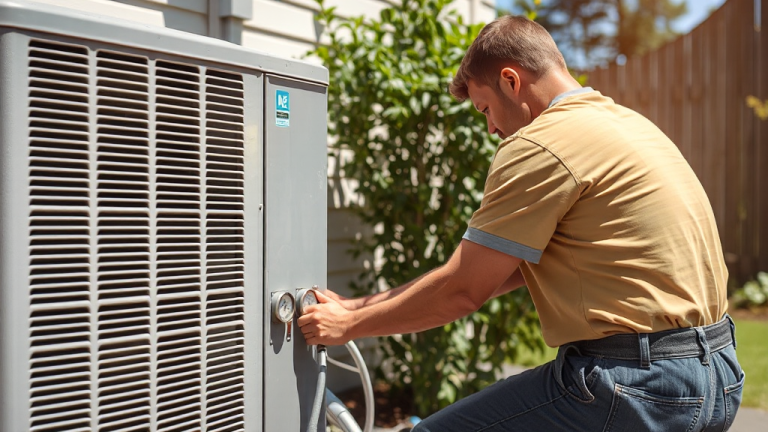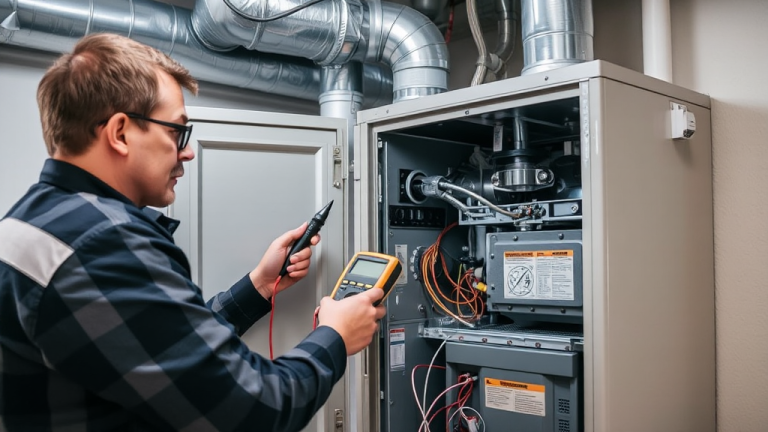


Property managers spend an average of $4,000 per unit per year on maintenance alone (National Apartment Association). Add tenant turnover, contractor coordination, and rent collection friction, and operations can consume 35-45% of gross rental income. For portfolios of 20+ units, those friction points compound into systemic profit erosion.
On AllBetter
Need a local pro?
Post the job free and compare bids from identity-verified local pros — payment held in escrow until the work is done right.
Find a verified pro near you →The eight biggest pain points for property managers are repairs and maintenance coordination, tenant retention, time management, service request handling, online reputation management, contractor sourcing, tenant screening, and rent collection. Each has a tech-driven fix that saves time, money, or both.
Related read: Cloud-based mobile apps for small home-service businesses
Related: how to handle tenant-turnover deep cleans without the chaos
1. Repairs and Maintenance: The Costliest Operational Burden
Watch: the 2:47 A.M. tenant text, and the calmer way to handle it (66 seconds).
Maintenance ranks as the number-one challenge in every industry report. BOMA estimates reactive repairs cost three to five times more than preventive maintenance, so every deferred decision compounds. The pain is not just financial. A single repair generates a cascade: tenant communication, contractor sourcing, scheduling, oversight, invoicing, accounting. Multiply across dozens of units and the admin load becomes unsustainable.
What makes maintenance specifically painful:
- Emergency requests arrive at unpredictable times
- Contractor markups from management companies add 10-20% per bill
- No competitive bidding means no negotiating leverage
- Poor documentation creates tax and liability exposure
Marketplaces like AllBetter address these by letting PMs post requests and receive competing bids from Stripe Identity-verified pros. The competitive structure imposes natural price discipline; escrow holds payment until the work is approved.
2. Tenant Retention: The Invisible Profit Killer
On AllBetter
Ready to get it done?
Fund escrow before work starts. Release payment when you approve the finished work.
Find a verified pro near you →Losing a good tenant costs $1,500-$5,000 per occurrence once you account for vacancy, cleaning, repairs, marketing, and screening (National Multifamily Housing Council). For a 50-unit portfolio at 50% annual turnover, that is $37,500-$125,000 a year in turnover alone.
What drives tenants to leave:
- Slow or unresponsive maintenance signals management does not care
- Poor communication leaves tenants feeling ignored
- Rent increases without service improvements
- Better amenities, renovations, or responsiveness at competing properties
A 2024 Buildium survey found maintenance responsiveness was the single strongest predictor of lease renewal, outranking price, location, and unit size. PMs who resolve requests within 48 hours retain at significantly higher rates. See tenant management strategies for property owners for the retention playbook.
3. Time Management: Too Many Tasks, Not Enough Hours
PMs wear five hats at once: maintenance coordinator, tenant relations, finance, marketing, compliance. A Buildium industry report found 62% of property managers work more than 50 hours per week, with admin consuming roughly 40% of that time.
The crunch creates a vicious cycle. Overwhelmed managers communicate slower, maintenance lags, service quality drops, turnover climbs, and turnover generates even more admin. Breaking it requires automating routine tasks and delegating low-value work to specialized tools. Marketplace contractor sourcing, automated rent collection, and centralized communication each reclaim hours.
4. Service Request Management: Where Small Failures Create Big Problems
A single missed service request cascades into a maintenance emergency, a complaint, a one-star review, and ultimately a vacancy. The challenge intensifies when requests arrive via phone, text, email, and in-person at once. Important items fall through the cracks.
Building an effective service-request system:
- Funnel every request through one channel (app, portal, or email)
- Acknowledge within 24 hours, even if resolution takes longer
- Categorize by urgency (emergency, urgent, routine, cosmetic) and set response timelines per tier
- Track completion metrics to surface patterns (e.g., recurring plumbing in one building)
Centralizing requests also creates dispute-proof documentation: timestamped records of every request, response, and resolution. Managing multiple properties at scale only works once intake is consolidated.
5. Reputation Management: The Review Economy Is Unavoidable
Tenants research PMs and landlords online before signing. Google reviews, Yelp ratings, and social commentary directly influence applicant decisions. A single unresolved complaint that becomes a public one-star review discourages multiple qualified prospects.
Practical approach:
- Set up Google Alerts for property and management-company names
- Respond to every review, positive and negative, within 48 hours
- Address negative reviews by acknowledging the issue and describing the resolution
- Ask satisfied tenants for reviews at natural touchpoints (successful repairs, lease renewals)
6. Finding and Vetting Contractors: The Trust Gap
The contractor trust gap is sharpest for property managers because you vet on someone else’s behalf — an owner’s asset, a tenant’s home — across trades you do not personally know.
The traditional approach — asking for referrals, calling multiple contractors, waiting for callbacks, comparing quotes manually — is especially painful in unfamiliar markets. Marketplaces reduce friction by aggregating verified pros into one interface where multiple bidders compete per project. AllBetter requires Stripe Identity verification before any pro can bid, and Escrow Shield ensures PMs never pay upfront for incomplete work. That combination of verification + payment protection closes the two biggest risk gaps in contractor relationships. For deeper background, see the ultimate guide to property maintenance and repairs for landlords.
7. Tenant Screening: Prevention Is Cheaper Than Cure
Before retention becomes a concern, PMs must select the right tenants. Credit checks and bank statements tell you whether an applicant can afford rent — they tell you nothing about whether they will respect neighbors, maintain the unit, or create management headaches.
The American Apartment Owners Association estimates the average court-ordered eviction costs $3,500-$7,000 in legal fees, lost rent, and unit damage — before counting the management time it consumes.
A comprehensive screening process includes:
- Credit report with score and obligation review
- Nationwide criminal background check
- Eviction history covering at least seven years
- Employment and income verification via direct employer contact
- References from at least two previous landlords (weight the one before the current one more heavily)
Consistent criteria applied equally to every applicant protect against fair-housing complaints. The $30-$50 per screening package is trivial compared to placement losses. New to the role? Start with the first-time landlord guide.
8. Rent Collection: Eliminating the Monthly Chase
Rent collection should be the simplest part of property management, yet it remains painful for PMs using outdated methods. Chasing physical checks, making deposits, tracking partial payments, and enforcing late fees consume time that generates no revenue.
The fix is straightforward: automated online payment processing. Platforms now accept ACH, credit cards, and digital wallets; they auto-track payments, generate receipts, apply late fees per lease terms, and produce tax-ready financial reports. Moving from paper to digital typically cuts collection admin by 70-80% and improves on-time rates by 15-20%.
Solving Pain Points Systematically Rather Than Reactively
The eight pain points share a common root: manual processes that do not scale. At five units they are annoying. At 20 they become unsustainable. At 50 they are impossible.
High-impact starting points:
- Move contractor sourcing to a competitive marketplace to cut per-repair cost and end phone tag
- Implement online rent collection to reclaim payment-processing hours
- Centralize service requests through one channel to prevent dropped tickets
- Standardize tenant screening to lower eviction probability
Each improvement reduces burden on one pain point, creating capacity to address the next. PMs who systematically automate low-value tasks report 60% less admin time and higher tenant-satisfaction scores.
Frequently Asked Questions
What is the most expensive pain point for property managers?
Repairs and maintenance typically represent 35-45% of total operating costs. However, tenant turnover may cost more when factoring in vacancy loss, cleaning, marketing, and screening, totaling $1,500-$5,000 per occurrence.
How can property managers reduce maintenance costs without sacrificing quality?
Competitive bidding through marketplace platforms typically reduces per-repair costs by 10-15%. Preventive maintenance schedules further reduce costs by catching issues before they become expensive emergencies.
What technology tools do successful property managers use?
Most combine a property management platform for rent collection and leases, a contractor marketplace for maintenance and repairs, and a communication platform for tenant interactions.
How do property managers handle tenant complaints about slow maintenance?
Acknowledge every request within 24 hours, provide realistic timelines, categorize by urgency, and communicate progress updates proactively. Informed tenants tolerate longer resolution times better than ignored tenants.
What is the average cost of tenant turnover for property managers?
The NMHC estimates $1,500-$5,000 per unit including vacancy loss, cleaning, repairs, marketing, and screening. For a 50-unit portfolio with 50% annual turnover, that is $37,500-$125,000 annually.
Should property managers use a single software platform or multiple specialized tools?
Most experienced managers use multiple specialized tools rather than one all-in-one platform. A dedicated rent collection platform paired with a contractor marketplace and communication tool typically outperforms a single platform.