

For pros on AllBetter
Looking for more jobs?
Homeowners post jobs and you bid direct — only pay when you win.
Get jobs on AllBetter →Every contractor needs a steady flow of jobs — but the app you pick decides how much profit survives the hunt. Some platforms charge you before you talk to a single homeowner; others only earn when you do. And what independent work is worth varies by trade — our electrician salary guide shows how the license ladder maps to pay.
What are the best apps for contractors to find work? It depends on how the platform charges you. Pay-per-lead apps like HomeAdvisor and Angi sell shared leads for roughly $15–$100 each; TaskRabbit takes a 15% cut of small hourly tasks; Nextdoor offers free neighborhood posting with no payment protection. A lead marketplace where homeowners post real jobs and verified pros bid with no fee to bid (a small fee only when they win and the invoice is paid) keeps the most margin in your business.
Whichever app you pick, run the numbers first: the real cost of contractor leads in 2026 breaks down attributed lead prices and the win-rate math.
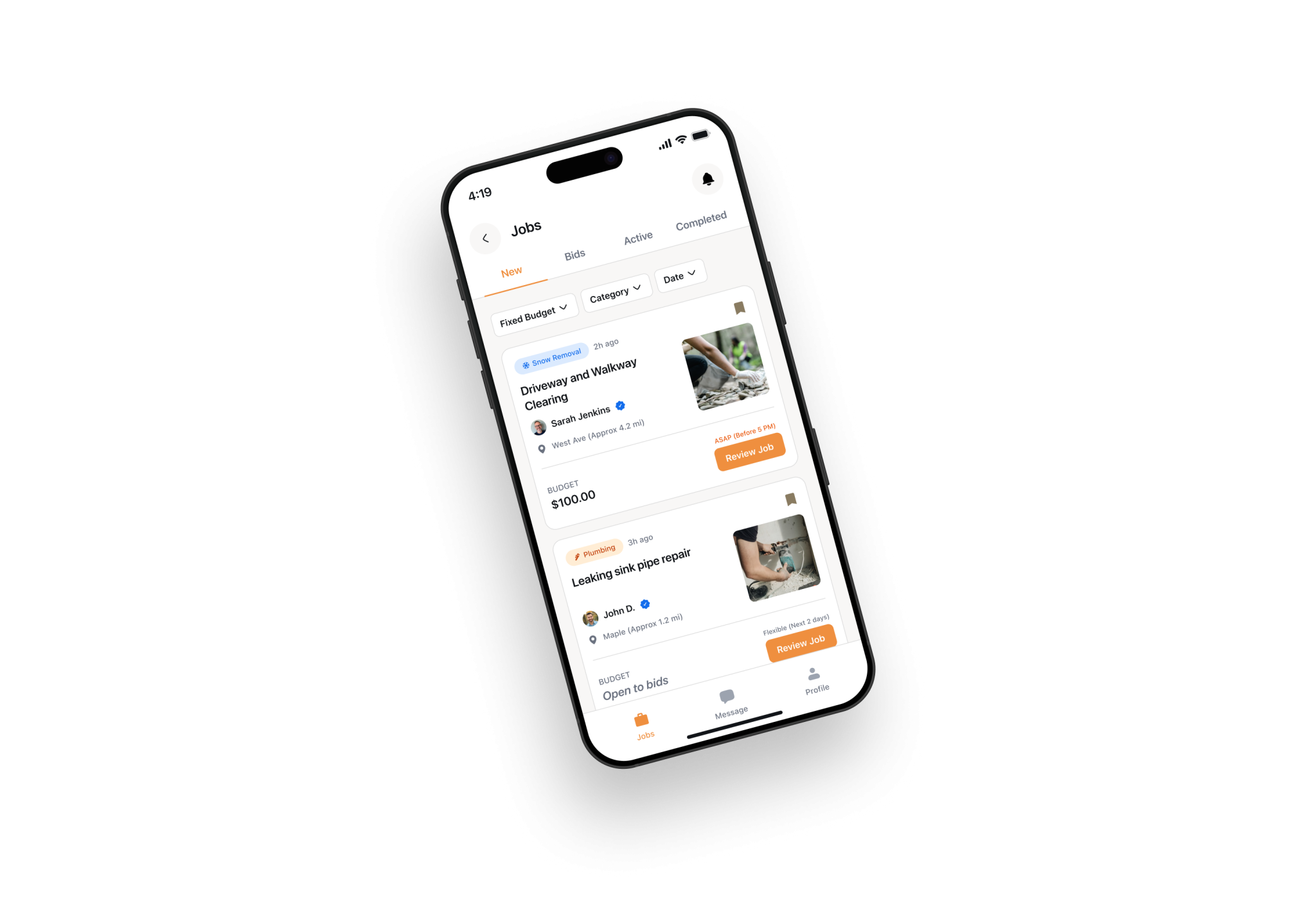
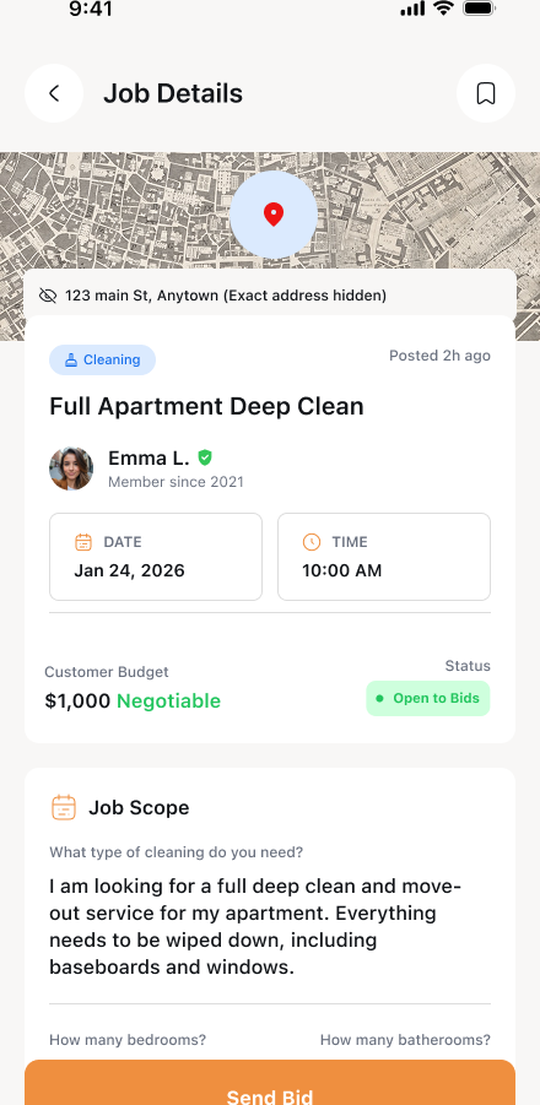
Short answer: the best apps for contractors to find work are the ones that put real, posted local jobs in front of you — with budget and scope visible up front — and let you decide which to bid. Apps to bid on jobs beat directory listings because the homeowner has already posted a real job and is actively looking to hire; the comparison below rates each major option on exactly that test. (Homeowner trying to hire instead? See our guide to the best apps for finding contractors.)
Why Most Lead-Generation Apps Drain Contractor Profits
Watch: why shared leads ghost so often, in 24 seconds.
The pay-per-lead model works like this: a homeowner submits a request, and the platform sells that same request to three, four, sometimes eight contractors at once. Each pays $15–$75 per lead, calls the homeowner, and hopes to be first. One wins. The rest lose their money entirely.
The platform profits whether you close the job or not — you absorb 100% of the financial risk while it absorbs none. For solo contractors and small crews, burning $500–$2,000 a month on dead leads forces you to underbid just to keep volume up, compressing margins into a cycle that is hard to escape.
HomeAdvisor vs. Angi vs. TaskRabbit vs. Nextdoor: An Honest Comparison
For pros on AllBetter
Ready to fill your schedule?
Join AllBetter and pick up local jobs near you — only pay when you win, payment protection built in.
Get jobs on AllBetter →Before switching platforms, understand exactly what you are paying for. Here is how the four major apps compare for contractors looking for work.
HomeAdvisor
HomeAdvisor runs a pay-per-lead model: contractors buy individual leads from roughly $15 to $75 depending on project type, location, and competition. The brand is well known and lead volume is high. But every lead is shared with several contractors at once, dragging close rates down to an industry average of 10–15%. Smaller marketing budgets get outspent by larger operations that can absorb the lead waste.
Angi (formerly Angie’s List)
Angi combines a lead marketplace with optional advertising packages from $300 to over $1,000 a month for premium placement. Its review system is established and homeowners trust the brand. The catch is cost: between lead fees, ad subscriptions, and the shared-lead model, monthly spend can climb past $1,500 for active contractors. Angi also sells leads to multiple providers by default, so you are always competing against pros with the same homeowner’s details.
TaskRabbit
TaskRabbit uses a gig-based model: homeowners post individual tasks and pick from available “Taskers,” and the platform takes a 15% service fee from the contractor’s earnings on each job. It works well for small tasks under $500, but it positions you as a task-doer rather than a business owner. For licensed tradespeople running larger projects, the structure undervalues specialized skill and makes recurring client relationships hard to build.
Nextdoor
Nextdoor connects homeowners with local pros through neighborhood-based social networking, with free business pages and paid ads starting around $2 a day. The community trust factor is genuinely valuable — a neighbor’s recommendation carries weight. The downside is inconsistency: lead volume depends entirely on your neighborhood’s activity, there is no built-in payment protection, and neither party is verified.
The Real Cost of Dead Leads
Most contractors track revenue. Few track lead cost per closed project — the number that matters. A contractor spending $800 a month on HomeAdvisor leads at a 12% close rate pays roughly $300 per closed project before picking up a tool — straight out of margin.
Working Without Payment Protection — What It Costs
Every experienced contractor has a story about getting burned: the homeowner who approved the work, watched you finish it, then disputed the invoice and refused to pay. The client who vanished after you bought the materials.
Without a structured payment system, those situations are nearly impossible to resolve — the time spent recovering a few thousand dollars often exceeds the amount itself. That is why escrow-based payment exists. When funds are held by a neutral third party before work begins, both sides have skin in the game. AllBetter’s Escrow Shield makes that automatic: the homeowner funds the project, you complete it, they approve, and funds release to you.
How to Evaluate Any Contractor App Before You Sign Up
Before joining any platform, ask these five questions. The answers tell you whether the app treats you as a partner or a revenue source.
- How does it make money? Charging per lead means its incentive is maximum lead volume, not quality. Earning a share of completed work aligns its incentive with yours.
- Are leads exclusive or shared? Shared leads force you to compete on response speed. Direct-match models kill that race to the bottom.
- Is there payment protection? A platform that connects you with homeowners but offers no safeguard is handing you 100% of the financial risk.
- What verification exists for homeowners? You verify your license, insurance, and identity — does the platform verify the person asking you into their home?
- Can you build direct relationships? Platforms that block direct communication keep you dependent on their lead system — a feature for them, not for you.
Building a Pipeline That Does Not Depend on One App
Contractors who build durable businesses never rely on a single lead source. The apps you use should be one channel in a pipeline that also includes referrals from past clients, a strong Google Business Profile for free local-search visibility, and partnerships with real estate agents and property managers.
If you are still building that base, our guide to starting a contracting business with no experience covers winning your first clients without a long review history. Once jobs are coming in, the right contractor efficiency software handles quoting, scheduling, and invoicing so you can focus on the work.
Frequently Asked Questions
What apps do most contractors use to find work?
The most widely used lead-generation apps are HomeAdvisor, Angi, TaskRabbit, and Nextdoor. HomeAdvisor and Angi sell shared pay-per-lead access, TaskRabbit handles small hourly tasks for a 15% fee, and Nextdoor offers free neighborhood posting. AllBetter JobPro is gaining traction among contractors who want to pay only when they win a job.
How much do contractors typically spend on leads per month?
Most active contractors spend between $500 and $2,000 a month on lead-generation platforms. With close rates averaging 10–15% on shared leads, the effective cost per closed project can reach $300–$700 before any work begins.
Are free contractor apps worth using?
Free options like Nextdoor can generate leads, but they lack payment protection and identity verification, and volume depends heavily on your neighborhood. The best value comes from a marketplace where you only pay when you win, with identity verification and escrow protection.
What is the difference between HomeAdvisor and Angi?
Both sell shared leads to multiple contractors at once. HomeAdvisor focuses on pay-per-lead access at roughly $15–$75 per lead. Angi pairs lead fees with advertising packages from $300 to over $1,000 a month, so total monthly spend for active contractors can exceed $1,500. Angi’s review system is the more established of the two.
Is TaskRabbit good for licensed contractors?
TaskRabbit works well for small tasks under $500, but it takes a 15% service fee and positions you as a task-doer rather than a business owner. For licensed tradespeople running larger projects, the structure undervalues specialized skill and makes recurring client relationships hard to build.
How does AllBetter’s Escrow Shield protect contractors?
escrow holds the homeowner’s payment in a neutral escrow account before work begins. Once you complete the project and the homeowner approves, funds release directly to you. This eliminates non-payment risk, invoice chasing, and the uncertainty of verbal agreements.
Can I use multiple apps to find contractor work at the same time?
Yes, and most successful contractors do. The key is tracking your cost-per-closed-project on each platform — apps with shared leads and per-lead fees often look affordable until you calculate the true acquisition cost. A marketplace with no fee to bid should anchor your pipeline; there, a small fee applies only when you win the job and the invoice is paid.
What is the best contractor leads app?
Judge any leads app by one number: the cost of a won job — total spend divided by jobs actually won — using the evaluation framework above. Per-lead platforms make that number unknowable in advance because you pay for every lead, dead or alive. AllBetter inverts it: you only pay when you win a job, so the math is knowable before you commit a dollar.
Are these apps good for independent contractors?
Don’t confuse trade marketplaces with gig apps — “independent contractor” searches surface both. Delivery and courier platforms are 1099 gig work; the apps compared above are for licensed and skilled trades running real jobs with real scopes. If you’re an independent tradesperson, every comparison on this page applies to you; if you want gig work, none of them do.