
A deal crossed my feed recently that’s worth more than the headline it got. A regional platform called Advantage Services Group had just bought Priority One Heating & Air Conditioning — a shop that had served the Willamette Valley since 1998. What’s notable isn’t the deal itself. It’s the buyer: not a New York megafund, but a family office run by an operator named David Williams. And it raises the question every independent owner should be asking right now: should you be talking to people like this?
On AllBetter
Need a local pro?
Post the job free and compare bids from identity-verified local pros — payment held in escrow until the work is done right.
Find a verified pro near you →It’s the right question, asked at the right time, and almost everyone gets the answer wrong in both directions. Some owners assume a life-changing check is one phone call away. Others assume “private equity” is a four-letter word and refuse to take the meeting. The honest answer depends entirely on which kind of shop you actually run — and most owners have never been told the truth about which kind that is.
Why is private equity buying HVAC companies?
Because residential home services is the single largest consolidation thesis in lower-middle-market private equity right now, and HVAC sits at the center of it. Recurring service revenue, non-discretionary demand, and a fragmented market of retiring owners make it a textbook roll-up.
The numbers tell you how hot it is. In early 2026 there were more than 35 active platforms competing for HVAC acquisitions in North America. Blackstone agreed to pay roughly $2.5 billion for Champions Group — a residential HVAC, plumbing, and electrical platform — at approximately 18.5 times EBITDA. Established platforms are now being recapitalized sponsor-to-sponsor: Sila Services to Goldman Sachs Alternatives, Service Logic to Bain Capital. When funds start selling platforms to other funds at those multiples, you are late in the cycle, not early — add-on deals are now outpacing new-platform formation, the classic sign of a maturing roll-up.
What changed in 2026 is who is buying. It is no longer just institutional megafunds and their portfolio companies. Operator-led family offices are now credible buyers: Advantage Services Group is backed by David Williams’ MRE Capital, a family office, and runs HVAC, plumbing, and electrical across Oregon, California, and Colorado. Founders Home Service Group is sponsored by a Kansas City single-family office. These buyers often pitch a softer version of post-close life — longer hold periods, more brand autonomy, less quarterly extraction pressure. Whether that pitch survives contact with the cap table is the real question, and we’ll get to it.

Will a roll-up even make you an offer?
Probably not — and this is the part no one says out loud. The target profile platforms actually pursue is narrow: $1M+ in EBITDA, a 60%+ residential or repeatable-service mix, recurring service-agreement penetration above 25% of revenue, clean GAAP financials, and an owner willing to roll 15–30% of the proceeds back into equity. That is a real business, not a truck and a phone.
The reality of the trades is the opposite of that profile. Of the 2,082 contractors who have signed up for AllBetter Field, roughly 80–90% are solo operators or two-person shops. A platform won’t return their call, because there’s no EBITDA to underwrite and no recurring book to buy. If you’re in that 80–90%, the roll-up isn’t your exit — it’s your new competitor. So the question quietly splits in two: for the minority with a sellable shop, should you sell? For everyone else, how do you survive the platform that just moved into your market?
What do you actually give up when you sell to a roll-up?
More than most owners realize at the LOI stage. You typically don’t get all cash — you roll 10–30% of the proceeds into the platform’s equity, which means you keep working, but now someone else controls the multiple your remaining stake is worth. Expect a 90–120 day process from signed letter of intent to close, plus a 3–12 month transition period where you’re an employee of the thing you used to own.
Then the operating model changes. The PE playbook in home services is well documented: technician revenue quotas, mandatory financing pitches, subscription “membership” programs, and pricing set by a regional manager who has never been to a job. You can watch where that road leads on the homeowner side. ARS/Rescue Rooter has been passed between private equity firms for nearly two decades; we mapped the full chain in Who Owns ARS/Rescue Rooter? A 4-Decade Private Equity Case Study. Roto-Rooter, owned by public Chemed, spent $20.6M in early 2026 buying back franchise territories to run them corporately. Neighborly, owned by KKR, now sits atop 5,500+ franchises including Mr. Rooter and Aire Serv. The name on the truck stays the same. The person deciding your customer’s price does not — which is exactly the dynamic homeowners are now learning to spot in The Homeowner’s Field Guide to the Roll-Up Scam.
When does selling to a roll-up actually make sense?
On AllBetter
Ready to get it done?
Fund escrow before work starts. Release payment when you approve the finished work.
Find a verified pro near you →It makes sense more often than the anti-PE crowd admits. If you’re genuinely burned out, if you have a real $1M+ EBITDA business with a recurring book, if you want liquidity and certainty now over a bigger but riskier number in five years, and if you have no family successor — a clean sale at a 2026 multiple can be the smartest financial decision of your life. There is no shame in taking a great offer for something you built.

It makes less sense when you’re sub-scale (you’ll get a working-capital price, not a premium), when you’d struggle to take orders from a 28-year-old regional VP, or when the operational gains the buyer is paying for are gains you could capture yourself. That last case is the trap: many owners sell because the business feels chaotic and unscalable — dispatch by text message, invoices in a spreadsheet, no recurring plans. They’re not selling a company. They’re paying a 5-to-7-figure fee to make someone else fix their back office.
How does a solo operator compete with a PE-backed platform?

By looking and operating like a platform without selling to one. A PE-backed competitor doesn’t beat you on craftsmanship — it beats you on speed-to-quote, professional invoicing, financing options, recurring maintenance plans, and the simple fact that they answer the phone. Every one of those is an operations problem, not a capital problem.
But the best software in the world is worthless if the person who needs it never opens it. The CEO of Workiz said the quiet part out loud: the hard problem in this industry was never the tech stack — it’s getting a technician to actually open the app on a roof in 95-degree heat. A solo operator has no office manager to clean up the paperwork that night. He is the office manager, and he’s on the truck, on the roof, under the house. That’s why AllBetter Field is built mobile-first — not a desktop suite with a phone app bolted on, the way the $300-a-month platforms are, but your entire operation run from the device already in your pocket. It fits into your day instead of forcing you to carve time out of it.
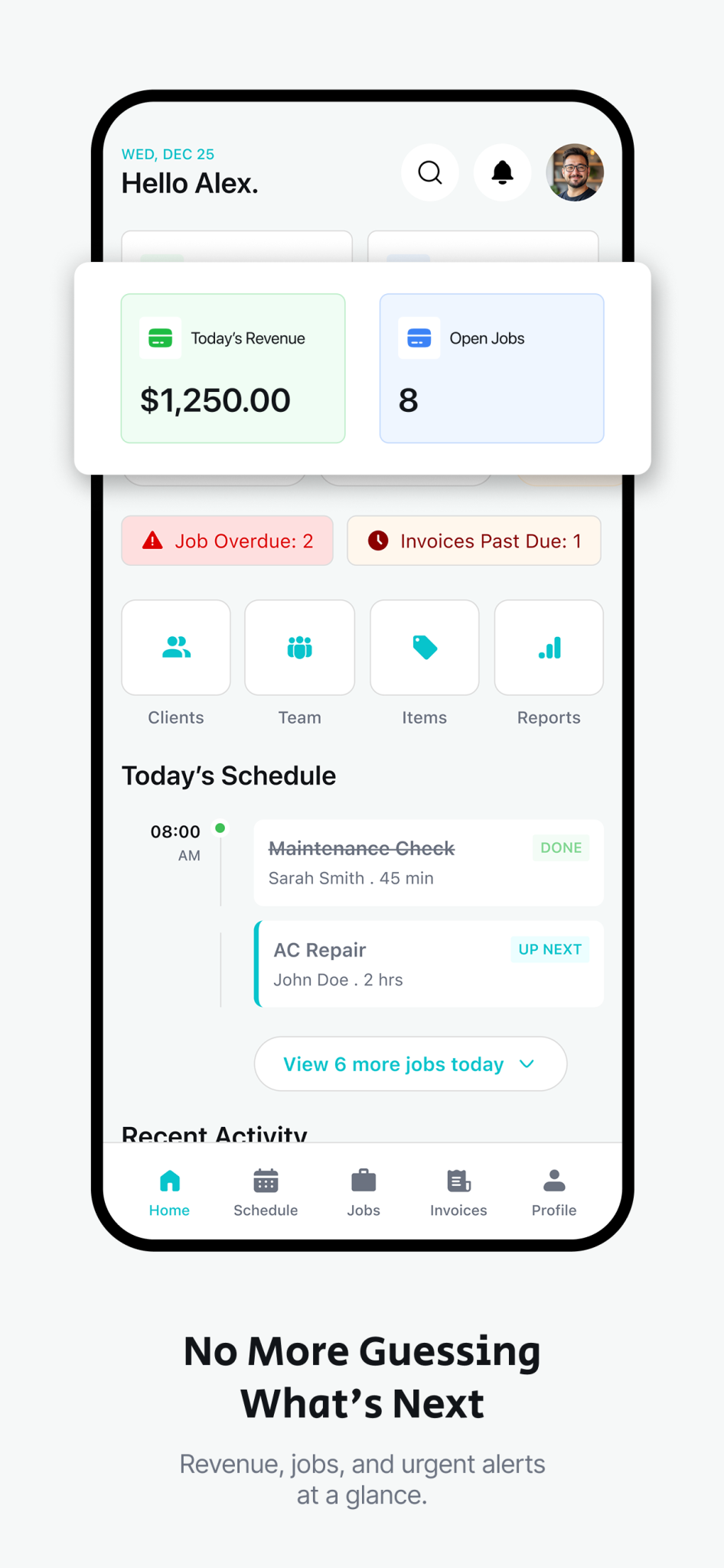
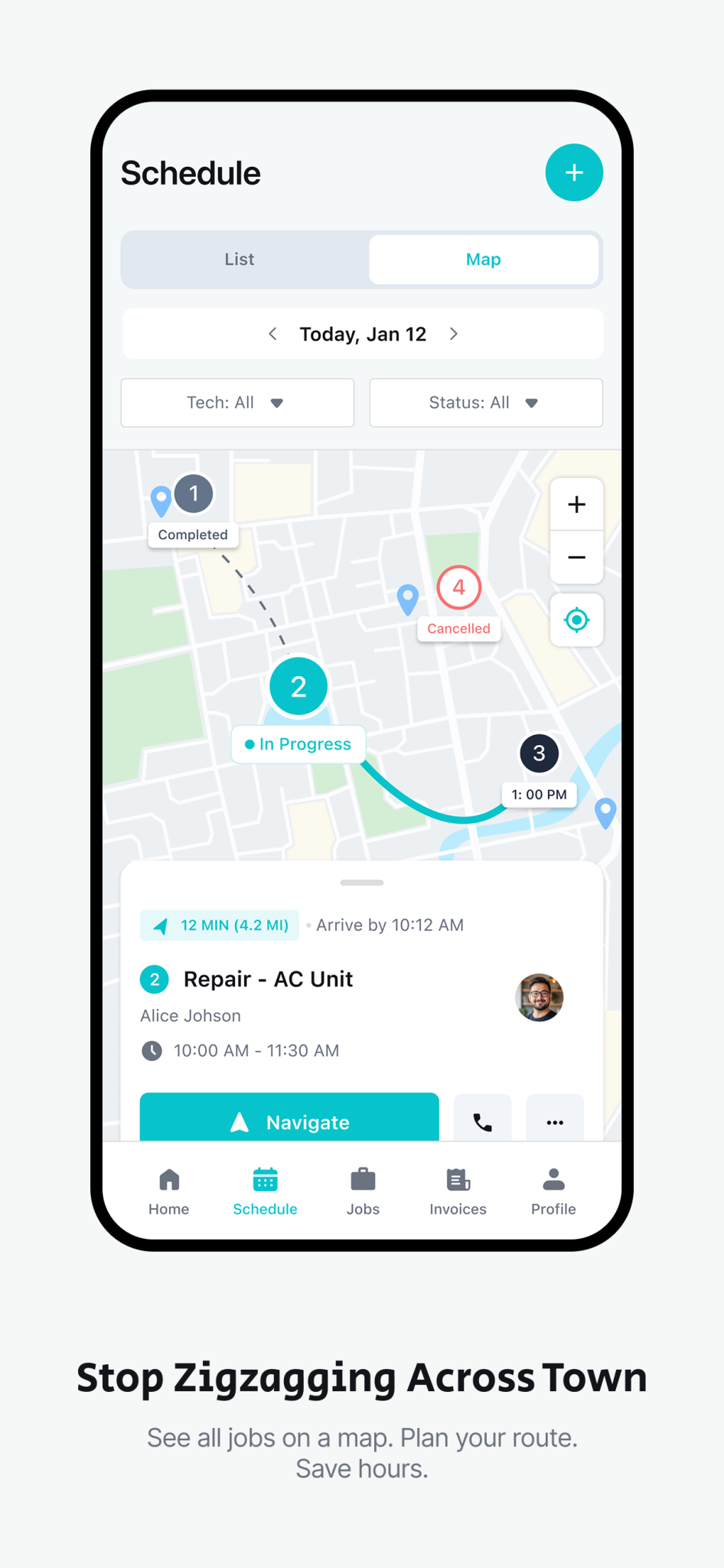
This is the entire reason AllBetter Field exists. The discipline a roll-up imposes from the outside — scheduling, dispatch, quoting, invoicing, payments, customer management, recurring service agreements — is the same discipline that makes a one-truck shop compete with a regional brand. Build it yourself and two things happen: you stop bleeding jobs to the platform that just entered your market, and if you ever do want to sell, you’ve built the recurring, clean-financials business that earns the premium multiple instead of the discount. The work is identical. The difference is who owns the upside when it’s done.
| The question | Sell to a roll-up | Stay independent on AllBetter Field |
|---|---|---|
| Who owns the upside | Fund controls the multiple on your rolled equity | You keep 100% of the shop and its gains |
| Who sets your prices | Regional manager / pricing software | You do |
| Cost to modernize ops | 10–30% rollover + your independence | $29–$129/mo — first 3 invoices free, no revenue cut |
| Your role after | Employee for a 3–12 month earn-out | Owner-operator |
| Who qualifies | $1M+ EBITDA, 25%+ recurring only | Any shop, including solo |
| If you sell later | One-time event, on their terms | You’ve built the premium-multiple business first |
How AllBetter Field changes this
You don’t need a private-equity sponsor to run a disciplined, scalable HVAC business — you need the software they’d make you adopt anyway, minus the part where you hand over your equity. AllBetter Field gives you quoting, invoicing, and payments starting at $29/month, with scheduling and dispatch on Pro ($69/month) and up — and you start free: your first three invoices are on us, so you only subscribe after the app has already gotten you paid. No revenue cut, ever. Take the meeting with the family office if you want. Just walk in knowing what your shop is actually worth — and that you can build the thing they’re paying for, yourself.
Run your whole shop from your phone — first 3 invoices free on AllBetter Field
By Tarik Khribech, Founder of AllBetter. Tarik holds a Master’s in Computer Science from Elmhurst College and spent his early career in technology at Citi and Discover before founding AllBetter (originally ChoreRelief) in 2016. AllBetter builds software for the independent trades — including AllBetter Field, which 2,082 contractors have signed up to use.
More roll-up investigations from The Moat
- Who Owns Apex Service Partners? The 107-Brand HVAC Roll-Up You’ve Never Heard Of
- Who Owns Mr. Rooter? The 17-Brand KKR Plumbing Empire
- Who Owns Champions Group Holdings? The $2.5B Blackstone HVAC Roll-Up Behind 22 Brands (2026)
- Mr. Rooter Pricing 2026: Quotes Run 30-50% Above Local
- Lead-Gen Tax Calculator: Real Cost of Sold Leads